

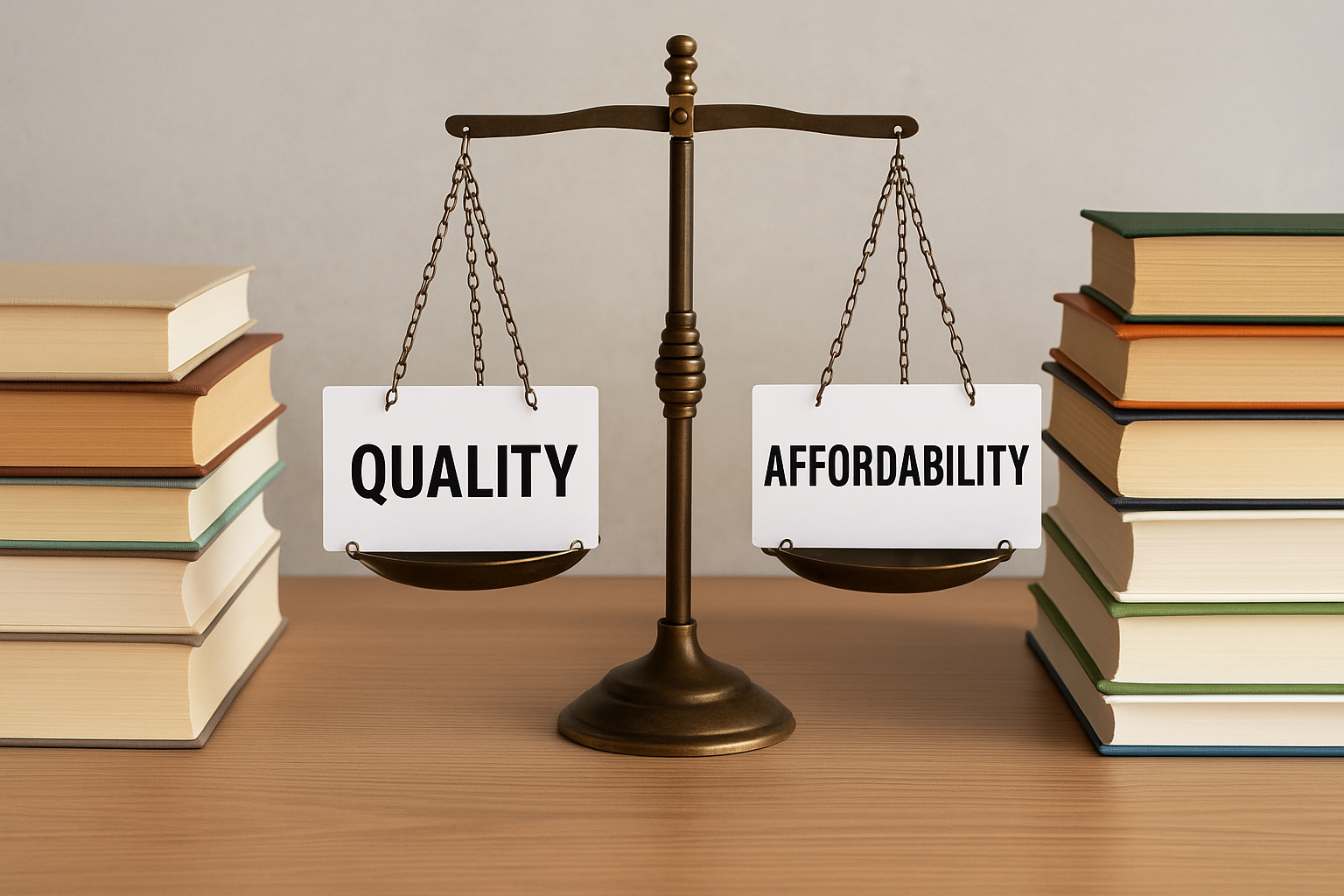
For students and families worldwide, the pursuit of education often comes with a difficult question: Can we find a balance between quality education and affordability? While top-tier schools and universities promise excellent outcomes, their costs can be overwhelming. At the same time, low-cost options may raise concerns about quality. The good news is—it is possible to strike a balance with thoughtful planning and smart choices.
The Rising Cost of Education
Over the years, tuition fees, textbooks, and living expenses have soared. For many families, this creates financial pressure and even debt. But expensive education doesn’t always guarantee the best results—sometimes, less costly institutions or alternative learning paths can provide equal or greater value.
What Defines “Quality” in Education?
Quality isn’t just about prestige or price tags. It’s defined by:
-
Strong faculty and teaching methods
-
Relevant curriculum aligned with job markets
-
Access to resources like libraries, labs, and technology
-
Opportunities for internships and networking
These factors matter more than brand names alone.
How to Balance Quality and Affordability
-
Explore Public Institutions
Many public universities and community colleges offer excellent education at a fraction of the cost of private schools. -
Leverage Online Learning
Online programs and hybrid models can reduce costs while maintaining flexibility and access to quality instruction. -
Apply for Scholarships and Grants
Financial aid, scholarships, and grants can significantly reduce expenses and make top programs more affordable. -
Consider Alternative Learning Paths
Vocational training, certifications, or skill-based courses can sometimes provide better returns than expensive degrees. -
Focus on Return on Investment (ROI)
Choose programs that align with your career goals and offer strong job placement rates. A practical, affordable education with solid outcomes can be more valuable than a prestigious but overpriced degree.
Final Thoughts
Balancing quality education and affordability is not only possible—it’s essential in today’s world. By redefining what “quality” means, exploring financial aid, and considering alternative pathways, students can access meaningful learning without overwhelming financial burdens. The key lies in smart decision-making, long-term planning, and focusing on value over prestige.