

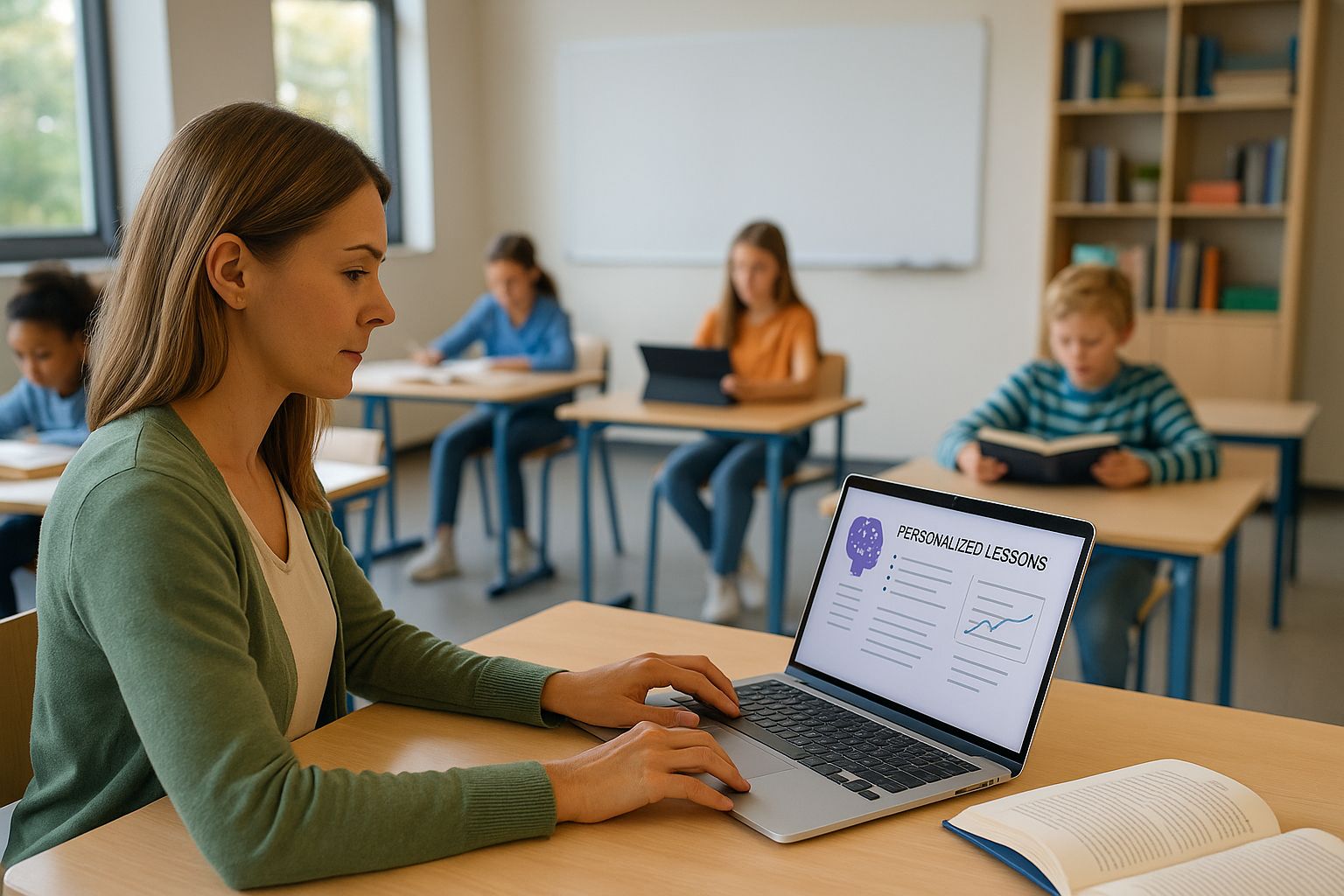
Personalized learning has become one of the most impactful shifts in modern education, and artificial intelligence is playing a central role in making it possible. As classrooms grow more diverse in learning styles, skill levels, and student goals, teachers are turning to AI-powered tools to help tailor instruction in ways that were once difficult to achieve at scale. These technologies streamline planning, reveal meaningful insights, and give educators more time to focus on creativity and connection, not administrative burdens.
Understanding Students’ Learning Needs More Deeply
AI systems can analyze student performance data to identify patterns that may be hard to spot through traditional assessments. These insights help teachers understand where individual students excel, struggle, or need reinforcement. Whether it’s pinpointing reading gaps, tracking math fluency, or highlighting skill progression, AI equips educators with clearer direction. This makes it easier to design lessons that match each student’s pace and abilities.
Creating Adaptive Lesson Plans Effortlessly
One of the most powerful benefits of AI in education is its ability to generate adaptive lessons. These tools help teachers build plans that adjust based on student responses and mastery levels. Instead of creating multiple versions of a lesson manually, teachers can rely on AI to suggest differentiated materials, scaffolded exercises, and alternative explanations. This allows every student—from fast learners to those needing additional support—to receive instruction that feels designed specifically for them.
Supporting Diverse Learning Styles
AI-powered platforms can recommend resources tailored to various learning preferences such as visual, auditory, or kinesthetic. For example, if a student absorbs information better through videos, the system can suggest multimedia content to strengthen understanding. If another performs best through hands-on practice, AI can highlight interactive activities or simulations. This kind of flexibility makes classroom instruction more inclusive and engaging.
Reducing Administrative Work so Teachers Can Focus on Teaching
Lesson planning, grading, and progress tracking consume valuable time that educators could spend working directly with students. AI seeks to reduce these administrative burdens by automating routine tasks. When the heavy lifting of data sorting and material matching is handled by technology, teachers gain more freedom to mentor, motivate, and encourage students. The human connection—still the heart of education—becomes richer as a result.
Helping Teachers Predict Future Learning Needs
Beyond supporting current lessons, AI tools can forecast potential challenges students may face later in the year. By monitoring trends in performance, the system can alert teachers when a learner seems likely to fall behind or when a topic may need more reinforcement. This proactive approach helps educators intervene early and maintain smoother learning progress across the classroom.
Conclusion
AI is transforming the way teachers plan and personalize lessons by revealing insights, adapting content, and simplifying instructional tasks. With these tools, students receive learning experiences that better match their unique needs and strengths. As AI continues to evolve, educators can expect even more ways to enhance engagement and support meaningful growth in every classroom.