

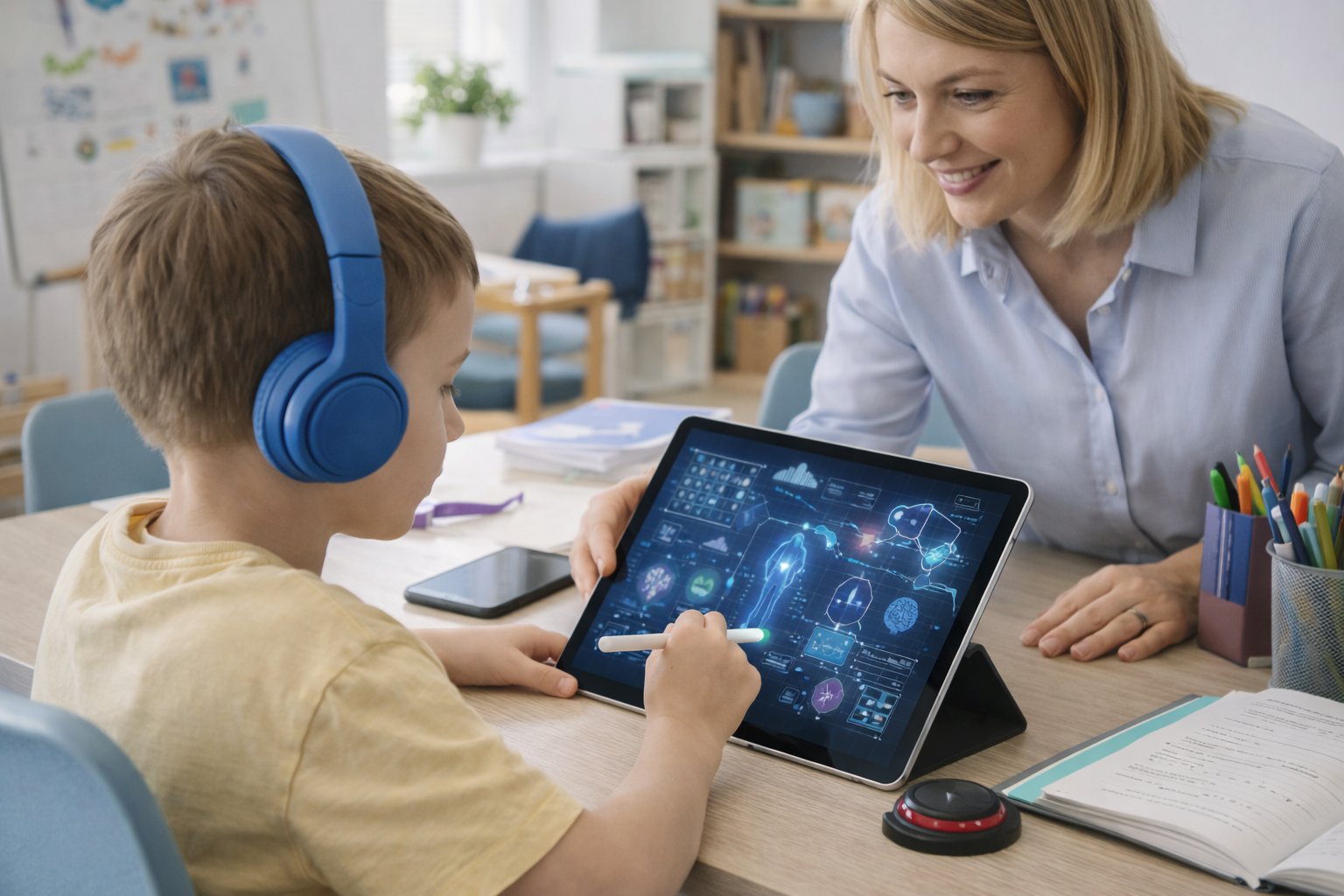
Special education programs are evolving as technology enables more personalized, inclusive, and responsive learning experiences. Artificial intelligence is playing a growing role in this transformation by helping educators better understand individual needs and adapt instruction accordingly. Rather than replacing human support, AI enhances it—providing tools that make learning more accessible and empowering for students with diverse abilities.
Personalized Learning Paths for Individual Needs
AI-powered systems analyze how students interact with content to identify strengths, challenges, and preferred learning styles. This insight allows platforms to adjust pacing, format, and difficulty in real time. Students receive instruction tailored to their needs, whether that means more repetition, alternative explanations, or advanced challenges. Personalization helps students progress with confidence and reduces frustration.
Assistive Technologies That Expand Access
AI is strengthening assistive tools used in special education. Speech recognition supports students with communication challenges, while text-to-speech and speech-to-text tools help those with reading or writing difficulties. Visual recognition and adaptive interfaces assist learners with physical or sensory impairments. These technologies remove barriers and enable greater independence in learning.
Early Identification and Targeted Intervention
AI helps educators identify learning needs earlier by detecting patterns that may signal difficulty. By analyzing performance trends, AI systems can flag areas where students need additional support. Early intervention allows educators to respond before challenges intensify. This proactive approach improves outcomes and supports long-term development.
Supporting Educators With Actionable Insights
Special education teachers manage complex and varied needs. AI provides insights into student progress beyond traditional assessments, highlighting engagement levels and response patterns. These insights help educators make informed decisions about instructional strategies and resource allocation. AI becomes a decision-support tool that enhances professional judgment.
Encouraging Inclusion and Confidence
When learning tools adapt to students instead of forcing students to adapt to rigid systems, inclusion improves. AI-supported programs help students participate more fully alongside peers. This inclusion builds confidence and reinforces a sense of belonging. Empowered learners are more engaged and motivated.
Ethical Use and Human-Centered Design
Responsible AI use is essential in special education. Transparency, privacy, and human oversight ensure technology supports students without labeling or limiting potential. AI works best when guided by educators who understand each learner’s context and needs.
Conclusion
AI is transforming special education by enabling personalization, accessibility, and early support. When used thoughtfully, it strengthens inclusion and empowers both students and educators. AI-enhanced special education programs represent a meaningful step toward more equitable learning environments.