

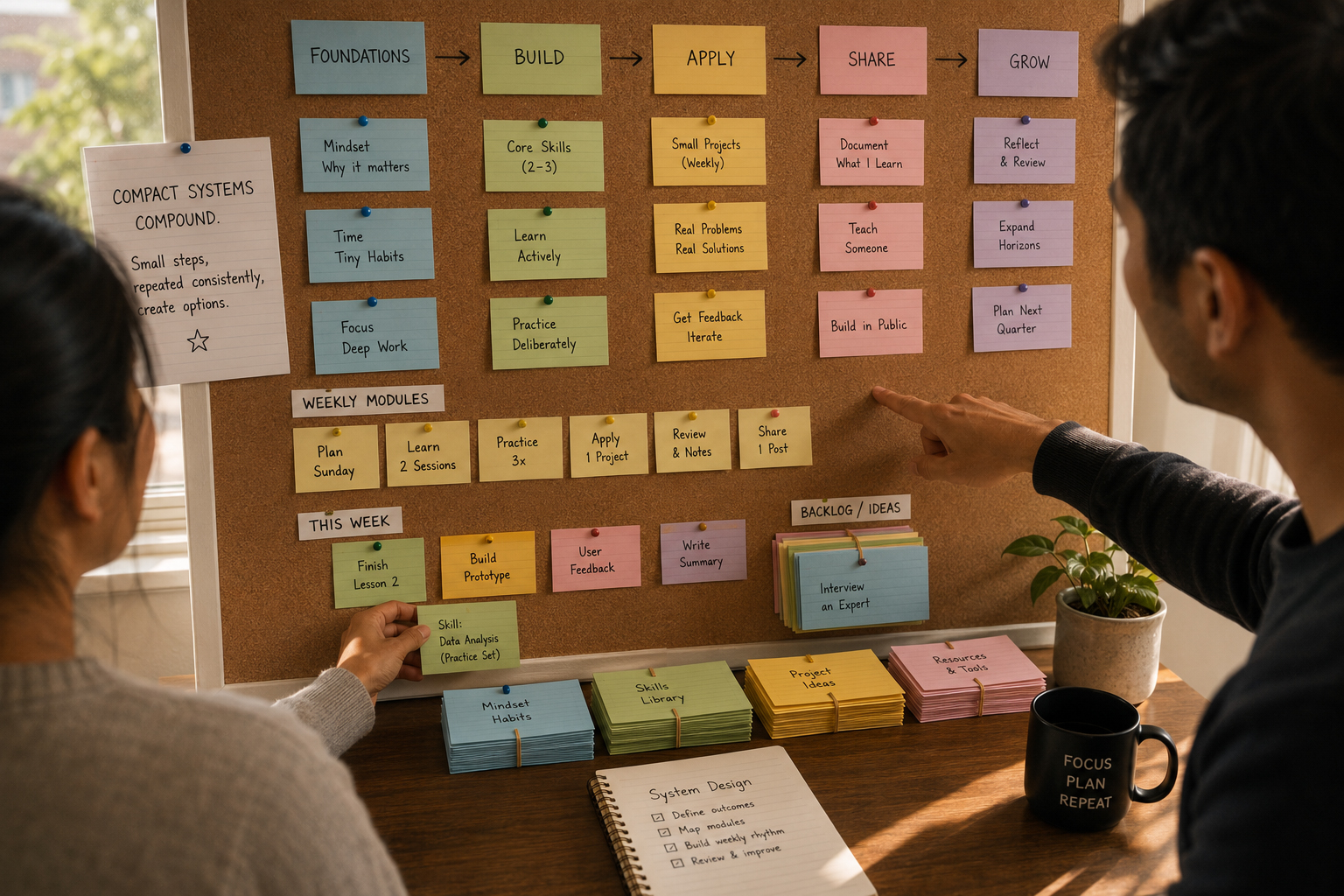
Learning effectively over a lifetime requires systems that adapt to changing goals and limited time. A compact, modular approach breaks skills and knowledge into manageable chunks that can be combined and scaled. This article outlines practical steps to design learning modules, integrate them into daily routines, and measure progress without burnout. The goal is a repeatable method you can refine as priorities shift. I’ll share templates and scheduling tips that work for short attention spans and busy calendars.
Why modular learning works
Modular learning treats each skill or topic as a small, self-contained unit you can study independently. That reduces cognitive overhead and makes scheduling simpler because modules fit into short time blocks. Modules also encourage deliberate practice by isolating specific objectives and feedback loops. When combined, they form flexible pathways that support both breadth and depth. This method reduces start-up friction and supports frequent repetition.
Adopting modular thinking helps you stay consistent while responding to new opportunities. It also makes progress visible and easier to celebrate. It creates modular evidence of growth you can review monthly.
How to design practical learning modules
Start each module with a clear learning outcome and a short list of core activities that directly support that outcome. Keep modules time-boxed—aim for one to six hours of focused work split into smaller sessions. Include a quick assessment or practice task so you can check mastery and adjust the next module. Prioritize transfer tasks that require applying what you learned in realistic contexts. Use minimal materials and repeat patterns to lower activation energy.
- Define a single outcome and one measurable skill.
- Limit scope to core skills and immediate applications.
- Plan brief feedback and assessment tasks.
Over time, tagging modules by difficulty and theme makes it easier to assemble personalized learning paths. This catalog becomes a reusable resource you can revisit and recombine. Soon you will be able to map fast learning loops across themes.
Maintaining momentum and measuring progress
Momentum comes from small wins and regular review, not marathon sessions. Use lightweight metrics like completion rate, performance on key tasks, and time spent on deliberate practice. Schedule periodic synthesis modules that connect previously separate modules to reinforce retention. Adjust cadence based on burnout signals and shifting priorities rather than rigid timelines. Small, scheduled pauses let you integrate lessons and reduce cognitive load.
Documentation and brief reflections after each module accelerate learning transfer. Pairing accountability structures with intrinsic goals maintains forward motion. Pair peers or mentors for occasional reviews to sustain accountability.
Conclusion
A compact, modular learning system helps you build skills consistently while staying adaptable. Design modules with clear outcomes, short timeframes, and deliberate feedback to scale learning across contexts. With simple metrics and regular synthesis, your learning becomes both sustainable and cumulative.