

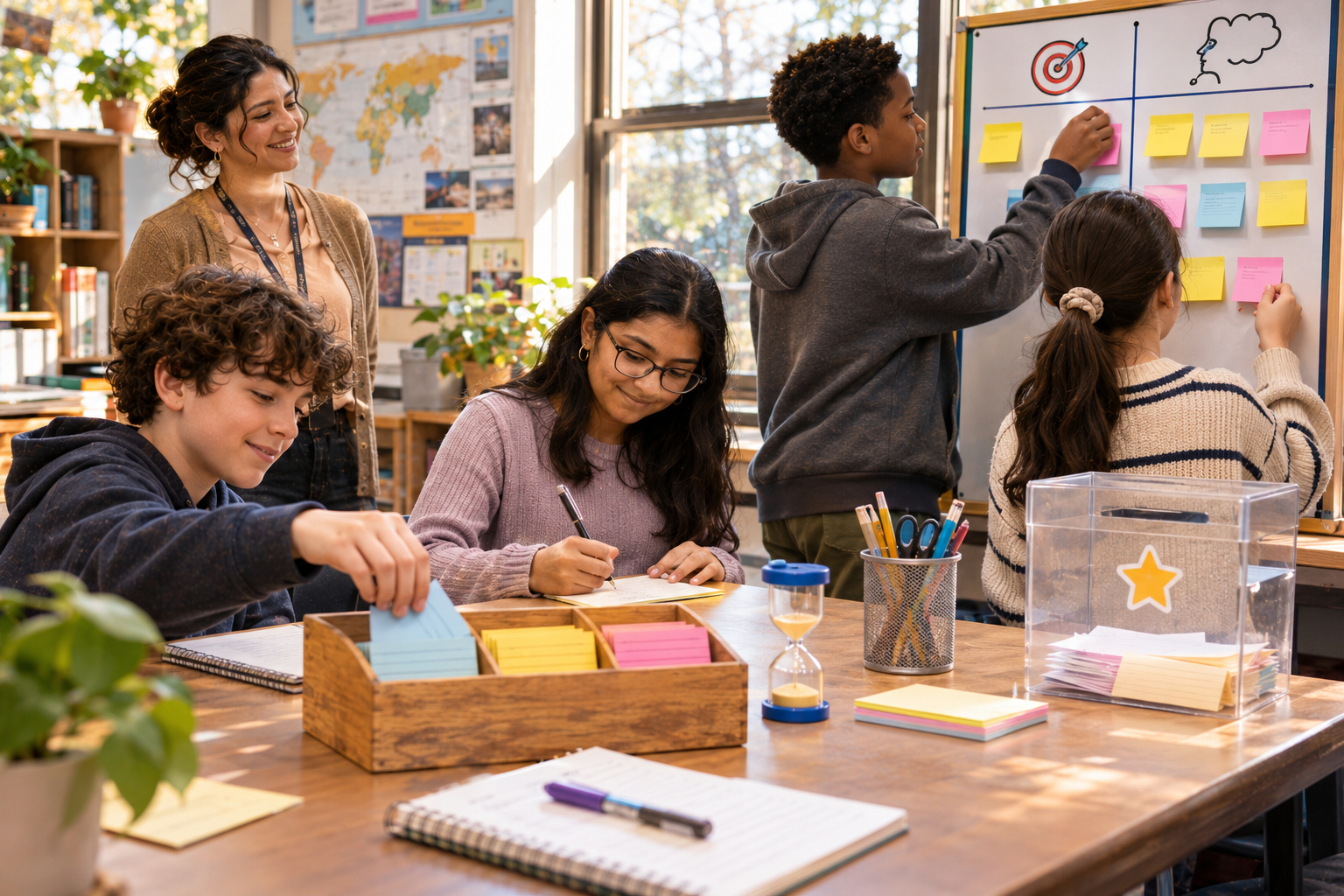
Small, well-chosen routines give students a reliable framework for making decisions about their work. When routines emphasize choice, reflection, and brief goal-setting, learners begin to steer their own progress without constant teacher direction. These practices take minutes each day, but their cumulative effect is that students practice independence regularly. The result is a quieter, more purposeful classroom where decisions live with learners as much as they do with the teacher.
Start Small: Daily Habits That Stick
Introduce two or three predictable moments each class where students act independently. For example, a short warm-up that students pick from, a two-minute reflection about what they learned, and a quick exit ticket can become anchors. Keep the steps identical for several weeks so students learn the rhythm and expectations. Predictability reduces cognitive load and leaves space for genuine choice.
- Do Now: three options for entry tasks (reading, practice problem, or journal).
- Two-minute reflection: jot one thing learned and one question.
- Exit ticket: a single sentence summary or next step plan.
These habits are easy to repeat and require minimal preparation. Over time they allow students to practice independent decisions without derailing instruction.
Make Choice Real, Not Just Cosmetic
Choice only builds agency if it matters to outcomes, not just appearance. Offer options that change how students approach the task — different texts to analyze, varied project formats, or roles in a group that alter responsibilities. When choices lead to different challenges or learning paths, students learn to weigh trade-offs and predict consequences. Teach students to explain why they selected an option so decision-making becomes explicit.
Start with structured, scaffolded choices before widening the range. Gradually remove supports once students show consistent reasoning about their selections.
Teach Short Goal-Setting and Reflection
Agency grows when learners articulate short, concrete goals and check progress frequently. Model a one-sentence goal for a lesson and show how to break it into tiny steps. Follow with a quick mid-class checkpoint so students can adjust their approach and end with a brief reflection about what helped or hindered progress. These moments train students to think like planners, not just doers.
- Goal prompt: “Today I will…”
- Checkpoint question: “What’s one change you can make now?”
- Reflection prompt: “What worked and what next?”
Keep prompts short and consistent so the practice feels manageable. Over time, students begin to set smarter goals with less prompting.
Conclusion
Simple, repeatable routines give students practice making decisions and assessing progress. Small choices, brief goals, and consistent reflections build the muscle of independence over weeks. Start with tiny steps and expand options as students show readiness.