

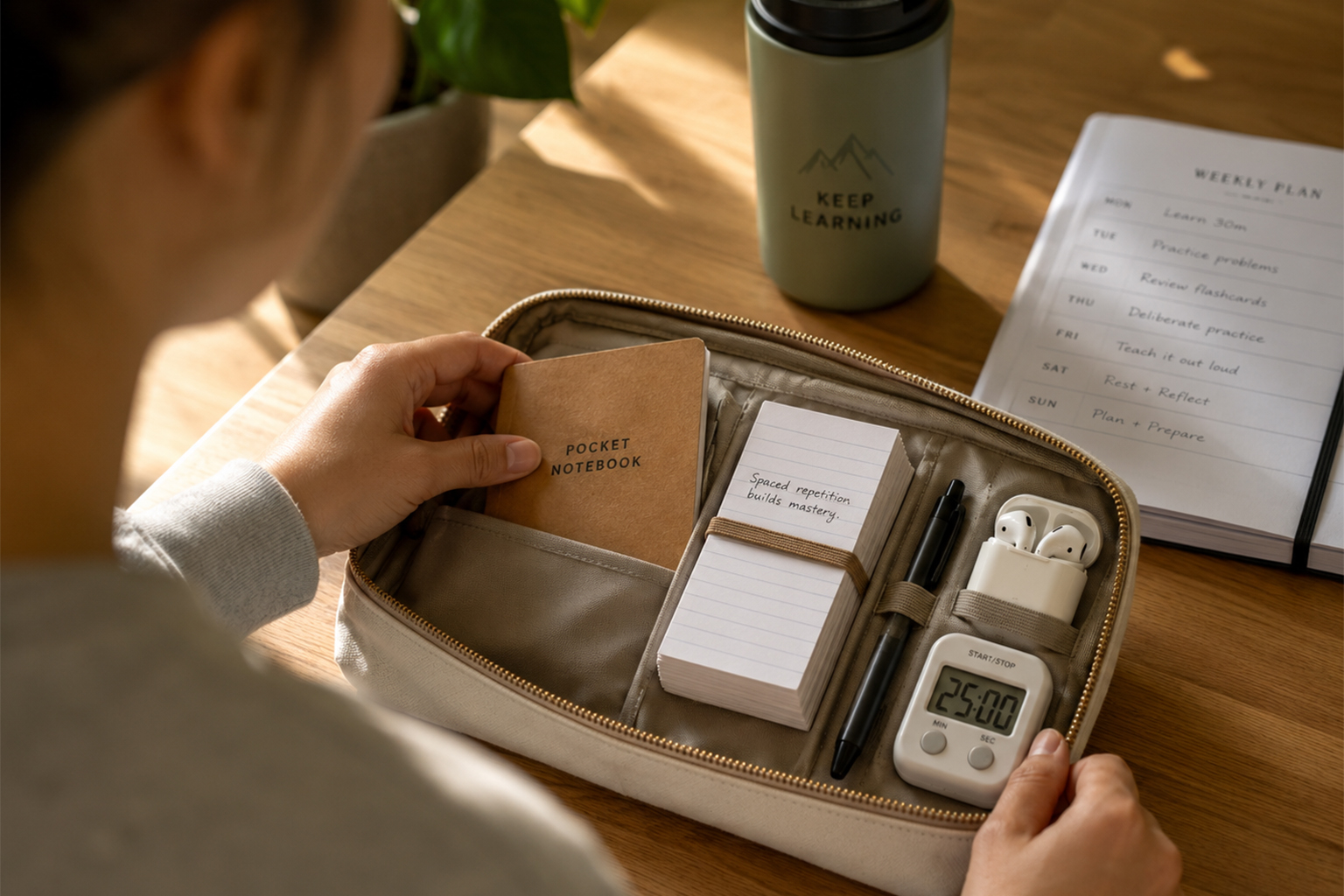
Creating a portable learning toolkit helps you stay consistent without adding complexity. A compact set of tools and habits makes it easier to capture ideas, practice deliberately, and measure progress. The right toolkit balances quick wins with long-term practices so learning becomes sustainable. This article outlines practical components, daily routines, and simple tracking techniques you can adopt immediately.
Core components of the toolkit
Start with a few reliable tools that cover capture, review, and practice. A lightweight note system, a spacing schedule, and a small practice plan form the backbone of effective self-directed learning. Each element should be easy to access and require minimal setup so you can use it habitually. Prioritize tools that support retrieval practice and reduce friction when you switch contexts.
- Capture: quick notes or voice memos for ideas and questions.
- Practice: short focused drills or deliberate practice templates.
- Review: spaced-repetition schedule or weekly review checklist.
With these elements in place you reduce interruptions to learning flow. The goal is not more tools, but more consistent use of fewer, well-chosen resources.
Daily habits that power the toolkit
Small daily actions compound into meaningful progress when they are easy to repeat. Reserve a single short session for focused effort, a quick review slot for spaced repetition, and a tiny planning moment to set the next step. Keep sessions deliberately short to avoid fatigue and to increase the chance of showing up the next day. Consistency beats intensity for long-term retention and skill acquisition.
Place your toolkit where you can reach it without effort and tie the habit to an existing routine. Over time, these micro-habits will create momentum and make learning feel automatic rather than optional.
Tracking, reflection, and adjustment
Regular reflection turns random activity into intentional progress by highlighting what worked and what didn’t. Use simple metrics like completed practice sessions, review streaks, or progress toward one measurable skill outcome. Weekly or biweekly reviews help you spot friction and adjust session length, frequency, or materials. A lightweight log of insights combined with action steps keeps the cycle moving forward.
Adjustments should be small and specific so experiments are easy to evaluate. Over months, these incremental changes compound into a personalized system that fits your life and learning goals.
Conclusion
Assemble a few reliable tools, adopt tiny daily habits, and reflect regularly to refine your approach. Keeping your toolkit compact reduces friction and increases consistency, which is the key to durable learning. Small, steady improvements will lead to meaningful skill growth over time.