

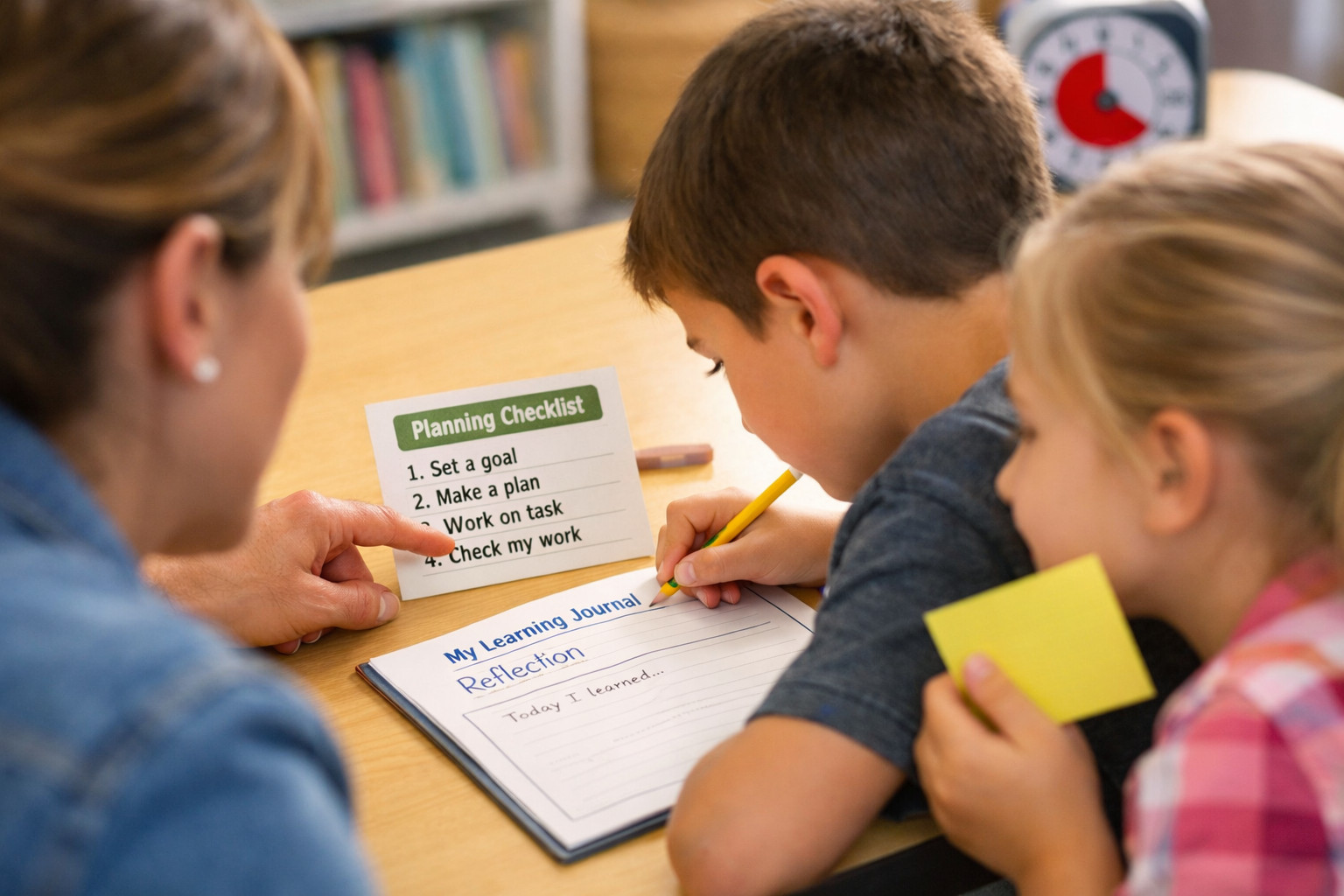
Metacognition — awareness and control of one’s thinking — is a powerful lever for learning. When students learn to plan, monitor, and evaluate their approaches, they become more effective and resilient learners. Teachers can cultivate this capacity with deliberate routines, explicit instruction, and consistent feedback. This article outlines practical techniques educators and trainers can use to build metacognitive skills across subjects. Small instructional changes can produce measurable improvements in learner autonomy.
Set clear goals and planning routines
Start by teaching students to set specific, achievable learning goals before tasks. Guide them to break complex tasks into manageable steps and estimate time and resources needed. Use planners, checklists, or digital tools so planning becomes visible and transferable. Explicit models of planning help students internalize the habit.
Over time, revisit goals and adjust expectations based on outcomes. This reflective loop reinforces realistic planning and reduces overwhelm.
Teach monitoring strategies during learning
Monitoring helps learners notice misunderstandings while they can still correct them. Introduce self-questioning prompts such as ‘Do I understand this?’ or ‘What is my next step?’ and encourage pausing checkpoints during lessons for quick checks. Pairing peers for brief reviews can surface gaps and demonstrate monitoring in action.
Frequent, low-stakes checks build fluency with monitoring and normalize revision. Over time students shift from external prompts to internal cues.
Practice reflection and self-assessment
Reflection consolidates learning by connecting actions to outcomes; it closes the loop on the metacognitive process. Create structured reflection templates that ask what worked, what didn’t, and what to try next. Encourage students to compare their predictions with results and to document strategy changes. Portfolio reviews and learning journals provide tangible records of growth.
Regular reflection drives incremental improvement and strategy transfer. When students own their adaptations, they gain confidence.
Supportive classroom rituals and feedback
Routines make metacognition habitual: short warm-ups, exit tickets, and brief goal check-ins can all serve this aim. Feedback should be specific to strategies and processes rather than only outcomes, pointing out effective planning or monitoring behaviors. Use question prompts that nudge students toward metacognitive thinking instead of supplying answers. Technology can assist by offering analytics, but human coaching remains essential.
Consistent, strategy-focused feedback and rituals create fertile ground for metacognitive growth. Small, frequent practices produce lasting change.
Conclusion
Developing metacognition is a practical, teachable endeavour that yields stronger, more independent learners. By embedding goal-setting, monitoring, reflection, and ritualized feedback into daily practice, educators create predictable pathways to mastery. These techniques are adaptable across age groups and disciplines to support continuous learning.