

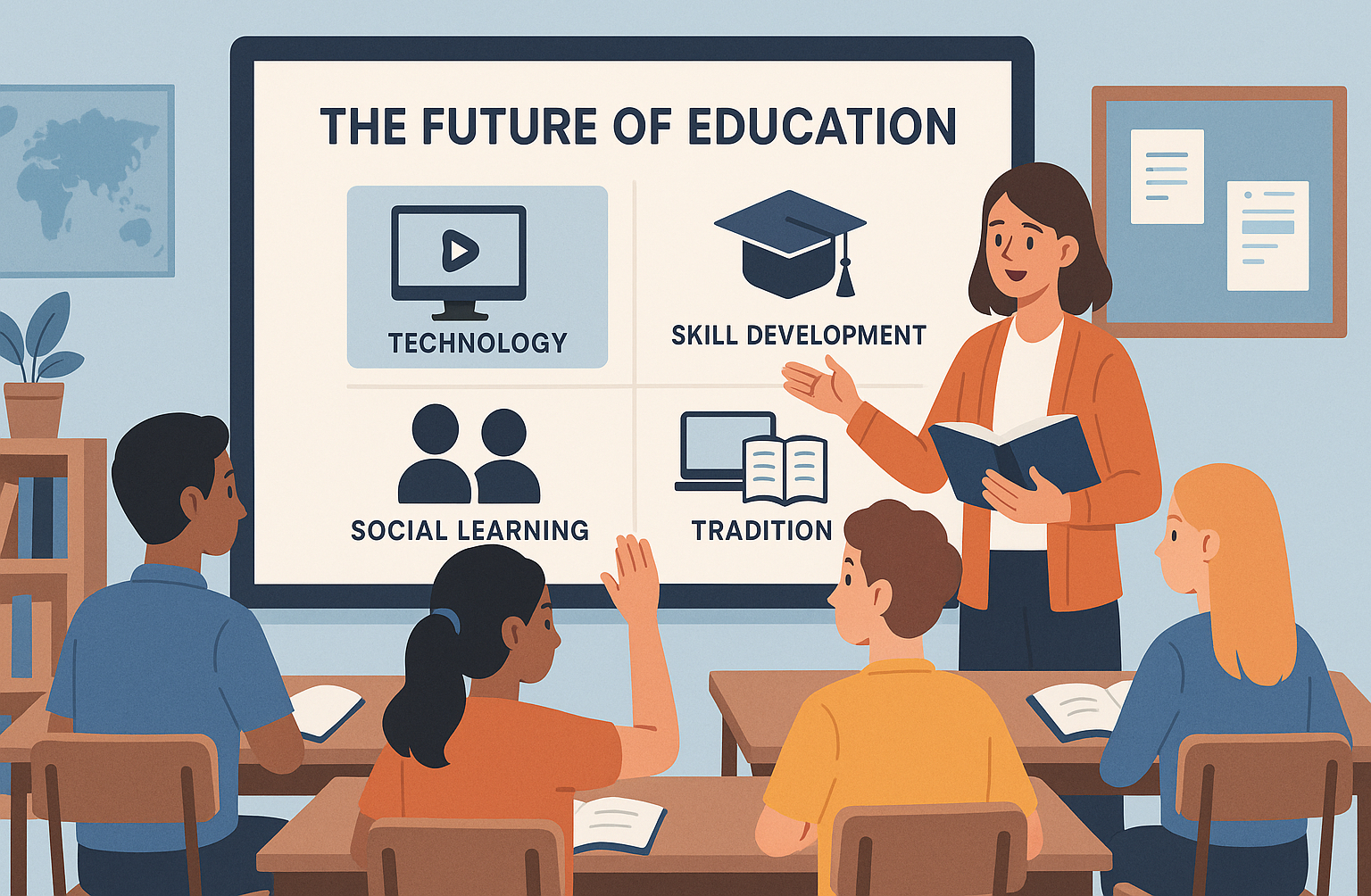
Education has always been the cornerstone of human progress. From ancient gurukuls and libraries to today’s digital classrooms, the way we learn has continuously evolved. In the 21st century, education is not just about books and exams—it’s about preparing learners for a rapidly changing world.
- Technology as a Game-Changer
Digital tools have transformed the learning experience. Online platforms, virtual classrooms, and AI-powered learning apps make education more accessible and personalized. Students in remote areas can now attend global lectures, while teachers use smart boards and interactive content to make learning more engaging.
- Lifelong Learning and Skill Development
Gone are the days when education ended with graduation. Today’s fast-changing job market demands continuous upskilling. Professional courses, micro-credentials, and online certifications empower individuals to stay competitive and adapt to new opportunities.
- Importance of Emotional and Social Learning
Beyond academic knowledge, schools are increasingly focusing on soft skills—like communication, empathy, teamwork, and resilience. These skills help students succeed not only in careers but also in life.
- Blending Tradition with Innovation
While technology plays a vital role, traditional teaching methods such as storytelling, discussion, and mentorship remain invaluable. A blended approach ensures that students get the best of both worlds—human connection and digital efficiency.
- The Road Ahead
The future of education is inclusive, flexible, and global. By embracing innovation while preserving core values, we can create learning systems that nurture creativity, critical thinking, and compassion.