

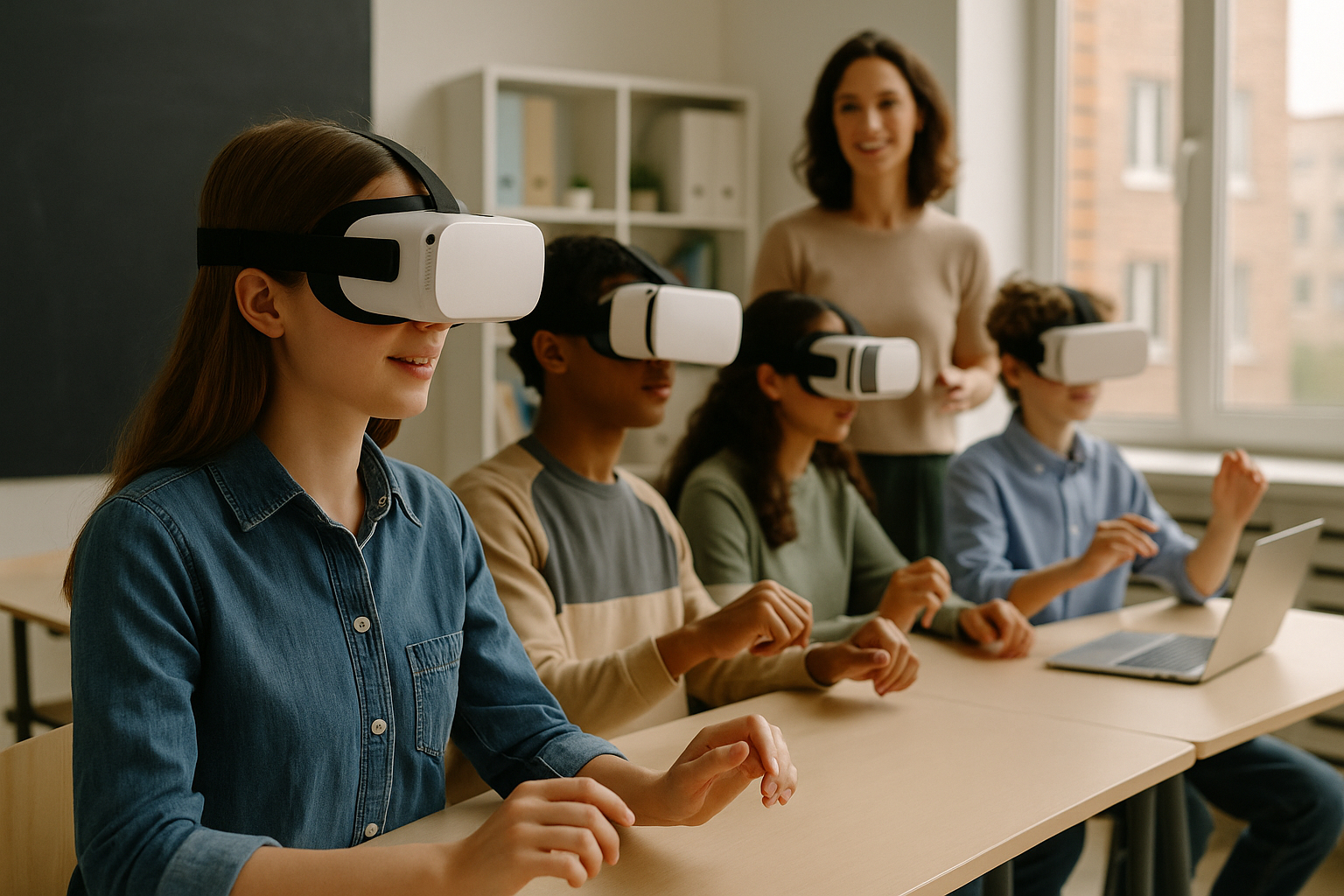
Education is entering a new dimension—literally. Virtual Reality (VR) is no longer confined to gaming or entertainment; it’s transforming how students learn, explore, and engage with the world. By immersing learners in interactive environments, VR bridges the gap between theory and experience, making education more dynamic, inclusive, and memorable than ever before.
Immersive Learning Experiences
VR allows students to step inside the lesson rather than simply read about it. Imagine exploring ancient civilizations in history class, walking through the human circulatory system in biology, or conducting chemistry experiments in a virtual lab—all without leaving the classroom. This hands-on, immersive approach deepens understanding by engaging multiple senses, leading to better retention and enthusiasm for learning.
Enhancing Engagement and Participation
Traditional teaching methods can sometimes struggle to capture student attention, especially in digital-first generations. VR changes that by turning passive learners into active participants. Through gamified experiences, virtual field trips, and 3D storytelling, students are encouraged to think critically and collaborate. This level of engagement helps improve focus, motivation, and confidence, especially for visual and kinesthetic learners.
Accessibility and Inclusion
One of VR’s greatest strengths is its ability to level the educational playing field. For students who can’t physically visit certain locations—due to cost, geography, or mobility limitations—VR provides equal access to experiences once thought impossible. It can also help students with learning disabilities by offering personalized environments that adjust pace, interactivity, and feedback according to individual needs.
Empowering Teachers with New Tools
VR doesn’t replace teachers—it enhances their role. Educators can design customized simulations, track student progress, and create safe spaces for experimentation. For instance, in medical training, students can practice surgical procedures without real-world risks. Teachers can use analytics from VR platforms to identify learning patterns and adapt lessons accordingly, blending traditional instruction with immersive technology.
Challenges and the Path Forward
Despite its potential, VR in education faces challenges such as high equipment costs, limited content availability, and training requirements for educators. However, as technology becomes more affordable and widely adopted, these barriers are shrinking. Partnerships between schools and tech developers are already expanding access and driving innovation in VR-based learning.
Conclusion
Virtual Reality is revolutionizing modern classrooms by making learning more engaging, experiential, and inclusive. It transforms abstract concepts into tangible experiences and empowers students to explore without boundaries. As VR technology continues to evolve, it promises not just to enhance education—but to redefine what it means to learn in the 21st century.