

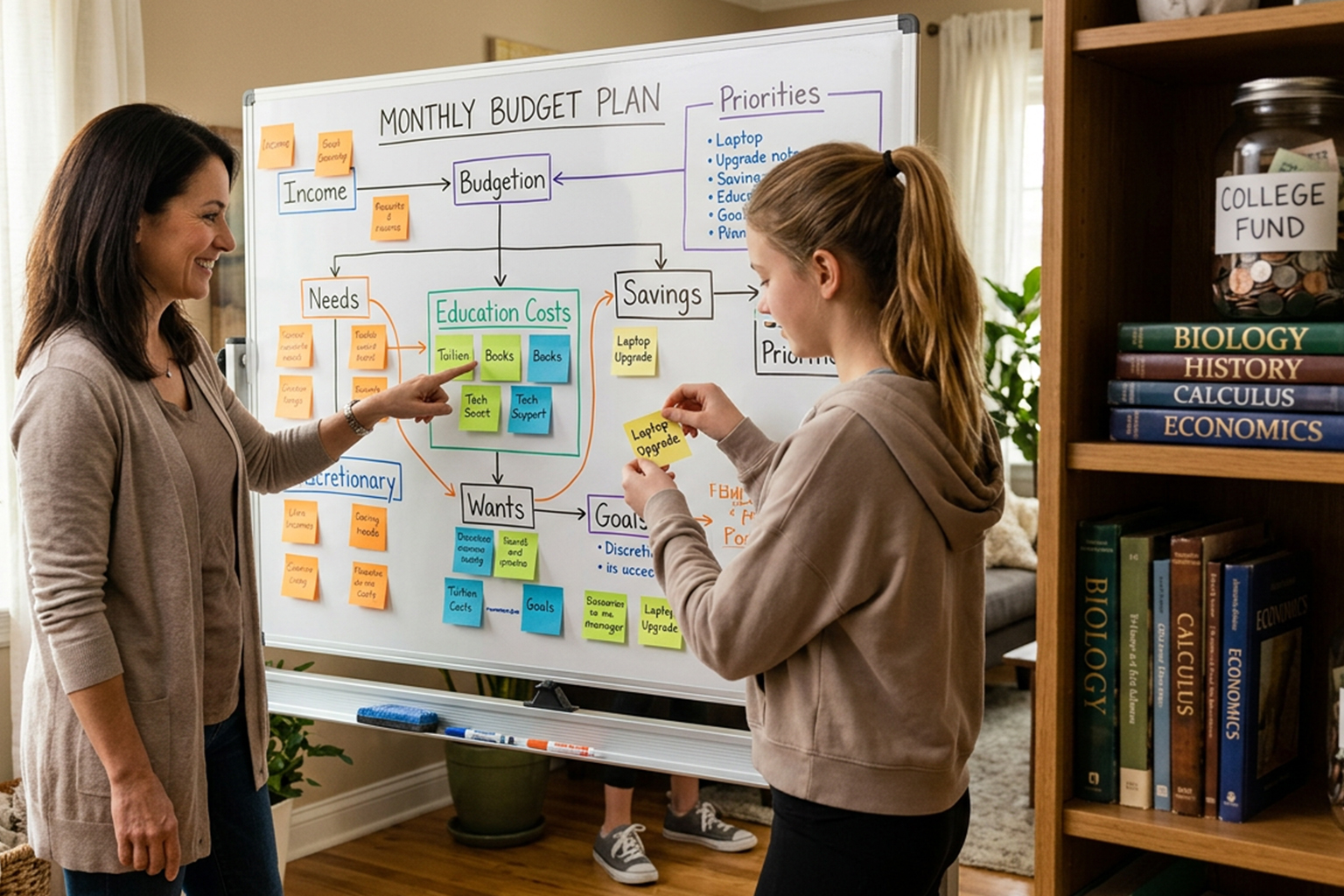
Managing education expenses requires intentional planning and regular review.
Families and learners face tuition, materials, and incidental costs that compound over time.
A clear spending framework helps align choices with goals and reduces last-minute financial stress.
This article outlines practical steps to assess costs, prioritize needs, reduce spending, and expand funding options.
Assess Current Education Spending
Begin by compiling a comprehensive view of ongoing and one-time education costs, including tuition, supplies, transportation, and fees. Track recent months of spending to identify patterns and seasonality so you can anticipate peak expense periods. Distinguish fixed recurring commitments from variable or discretionary items that can be adjusted. This baseline makes it easier to build realistic forecasts and spot quick savings.
Revisiting this assessment every semester or year keeps plans current. Small, regular updates prevent surprises and support better decision-making.
Prioritize Needs and Set Clear Targets
Decide which education outcomes are essential and which elements are flexible when budgets tighten. Assign priority levels to categories like core tuition, supplemental tutoring, technology, and extracurriculars. Create short- and long-term funding targets so resources align with prioritized goals rather than ad hoc choices. Clear targets help guide trade-offs and keep spending purposeful.
Use measurable targets to evaluate options and to communicate priorities with family or stakeholders. Priorities may change, so document reasons behind each decision.
Strategies to Reduce Costs Without Sacrifice
Look for ways to trim variable expenses while preserving learning quality, such as buying used materials, sharing resources, or switching to lower-cost course options. Negotiate payment plans with providers to spread large bills and avoid high-interest borrowing. Encourage efficient study habits and resource sharing to reduce recurring extras. Incremental changes in several areas can produce meaningful annual savings without harming outcomes.
Implement cost-saving habits gradually to maintain buy-in and monitor the impact. Small wins build momentum toward larger budget improvements.
Expand Funding and Maintain Flexibility
Explore diverse funding sources like scholarships, employer-sponsored programs, community grants, and savings vehicles that match your time horizon. Consider short-term income strategies such as part-time work or freelance projects to cover variable costs and maintain liquidity. Keep a contingency buffer for unexpected fees and adjust allocations as priorities shift. Flexibility in both funding and spending reduces the risk of disruption to learning plans.
Regularly review funding mixes to ensure they remain cost-effective and aligned with goals. Rebalance when circumstances change to protect progress.
Conclusion
Build a realistic spending baseline, set priorities, and pursue incremental cost reductions to protect educational goals.
Combine diversified funding with flexible planning to respond to changes without sacrificing outcomes.
Review and adjust the plan regularly to sustain progress and reduce financial stress.