

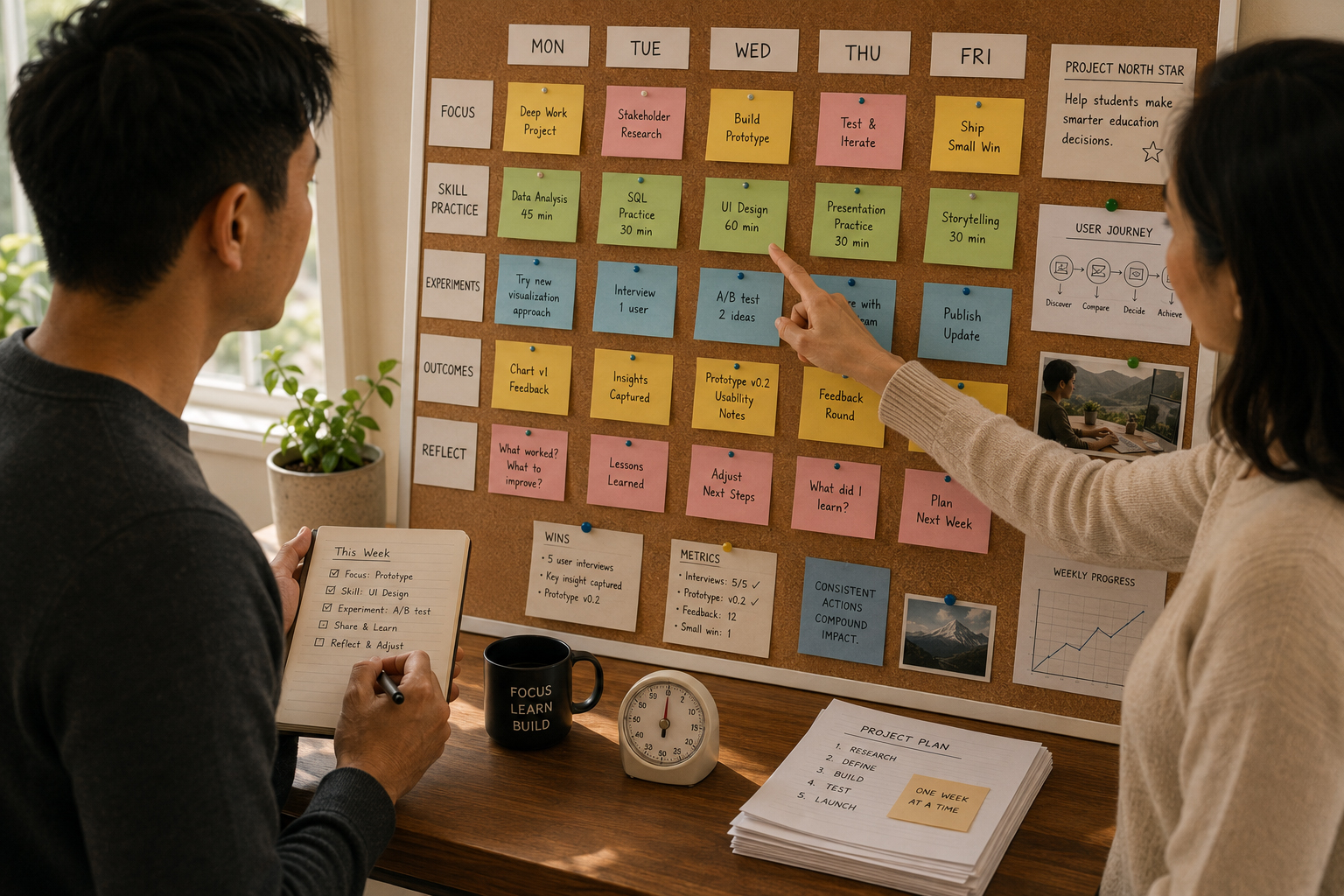
Career momentum often comes from small daily structures rather than big, infrequent leaps.
When you design routines that tie to skill growth and clarity, progress compounds steadily.
This article outlines practical, repeatable approaches to shape your workweek and build visible career gains.
Use these methods to create a resilient rhythm that adapts as your goals evolve.
Set a Weekly Structure
A predictable weekly framework reduces decision fatigue and creates space for focused learning.
Block time for deep work, skill practice, networking, and reflection so each area receives consistent attention.
Prioritize one measurable outcome per week that connects to a larger quarter goal to keep effort directional.
This approach keeps momentum tangible and prevents busywork from dominating your calendar.
Start by mapping one to two fixed blocks you protect each week.
Over time, increase complexity as habits stick.
Build Transferable Skill Blocks
Focus on skills that travel across roles and contexts, such as communication, analysis, and project framing.
Create concentrated practice blocks: short, repeated sessions that target a single capability until improvement is clear.
Combine deliberate practice with real work projects so learning produces evidence you can show.
Document outcomes and artifacts to convert practice into a portable portfolio that supports future moves.
Rotate which skill blocks you prioritize each month to avoid plateaus.
This keeps development balanced and strategically aligned with long-term aims.
Review and Adjust with Short Experiments
Treat career changes as hypotheses and test them with low-cost experiments that last days or weeks.
Design a clear question, a success metric, and a small action you can take to learn quickly.
Collect qualitative feedback and simple data, then decide to scale, pivot, or stop based on what you learn.
Iterative experiments reduce risk and build confidence without derailing steady progress.
- Shadow a role for a week to test interest.
- Publish a short project to gauge reception.
- Volunteer for a cross-functional task for exposure.
Make review a weekly habit and a quarterly ritual so insights compound.
These small checks keep your path actionable and aligned with real feedback.
Conclusion
Small, consistent structures produce career momentum more reliably than sporadic pushes.
By combining weekly rhythms, focused skill blocks, and short experiments you create a resilient growth system.
Start modestly and iterate; clarity and evidence will follow.