

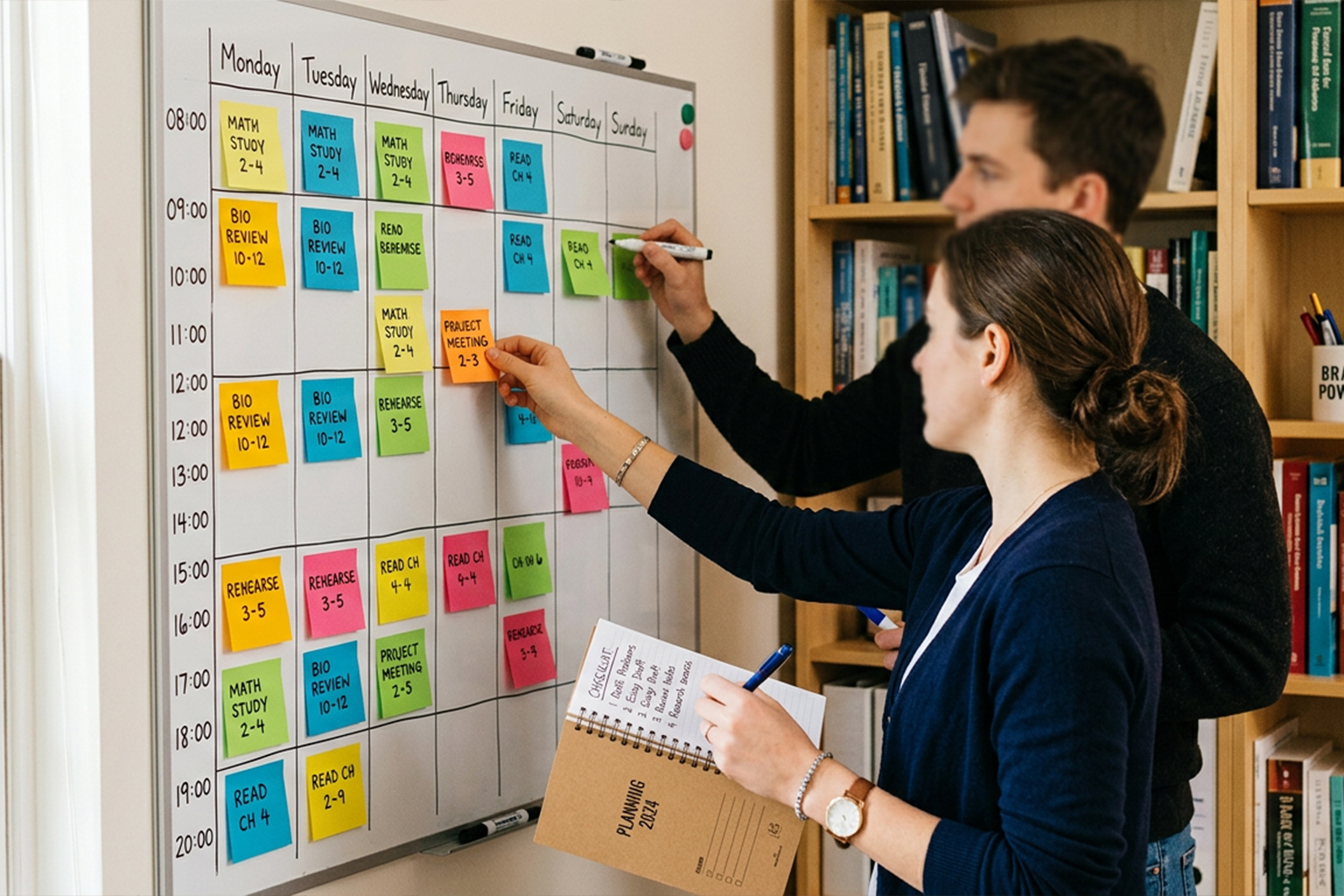
Weekly learning cycles give structure to steady skill development and prevent momentum from stalling.
They let you break a larger goal into focused experiments, focused practice, and short synthesis tasks.
By limiting scope each week you reduce decision fatigue and make progress visible more often.
This approach fits into busy schedules and is adaptable across subjects and experience levels.
Structure the Cycle
Define a clear, measurable outcome for the week so every session serves a purpose and you can judge progress.
Organize the week into phases: exposure to new material, deliberate practice, applied rehearsal, and dedicated reflection.
Keep individual sessions short enough to sustain intensity but long enough to produce tangible work and learning artifacts.
When the cycle has consistent phases, it becomes easier to compare results across weeks and spot patterns.
A simple template reduces setup time and keeps the emphasis on doing rather than planning.
Prioritize and Schedule
Select one primary learning priority and possibly one secondary focus to avoid scattering effort across too many goals.
Block time on your calendar for focused practice and treat those slots as commitments rather than optional tasks.
Blend longer focus sprints for deep work with micro-sessions for review and spaced repetition to reinforce retention.
- Example: Two 50-minute sprints for practice, three 15-minute review sessions, one wrap-up reflection.
- Example: One applied task midweek to test transfer, and a short summary on Friday.
Prioritization and explicit scheduling make progress reliable and reduce the chance of deprioritizing learning under pressure.
Small, protected routines compound into meaningful skill improvement over months.
Measure and Iterate
Track simple indicators of improvement such as speed, accuracy, autonomy, or the complexity of tasks you can complete.
At the end of each cycle, reflect on what worked and what felt stalled, then adjust the next week’s variables accordingly.
Treat each week as an experiment: change one variable at a time to learn which adjustments yield better results.
Regular measurement prevents drift and supports data-informed decisions about study methods and time allocation.
Iteration turns occasional progress into predictable growth rather than random bursts.
Conclusion
Weekly learning cycles make consistent practice manageable and measurable.
They simplify decisions, protect focus, and encourage frequent reflection.
Over time, small weekly gains compound into substantial skill growth.