

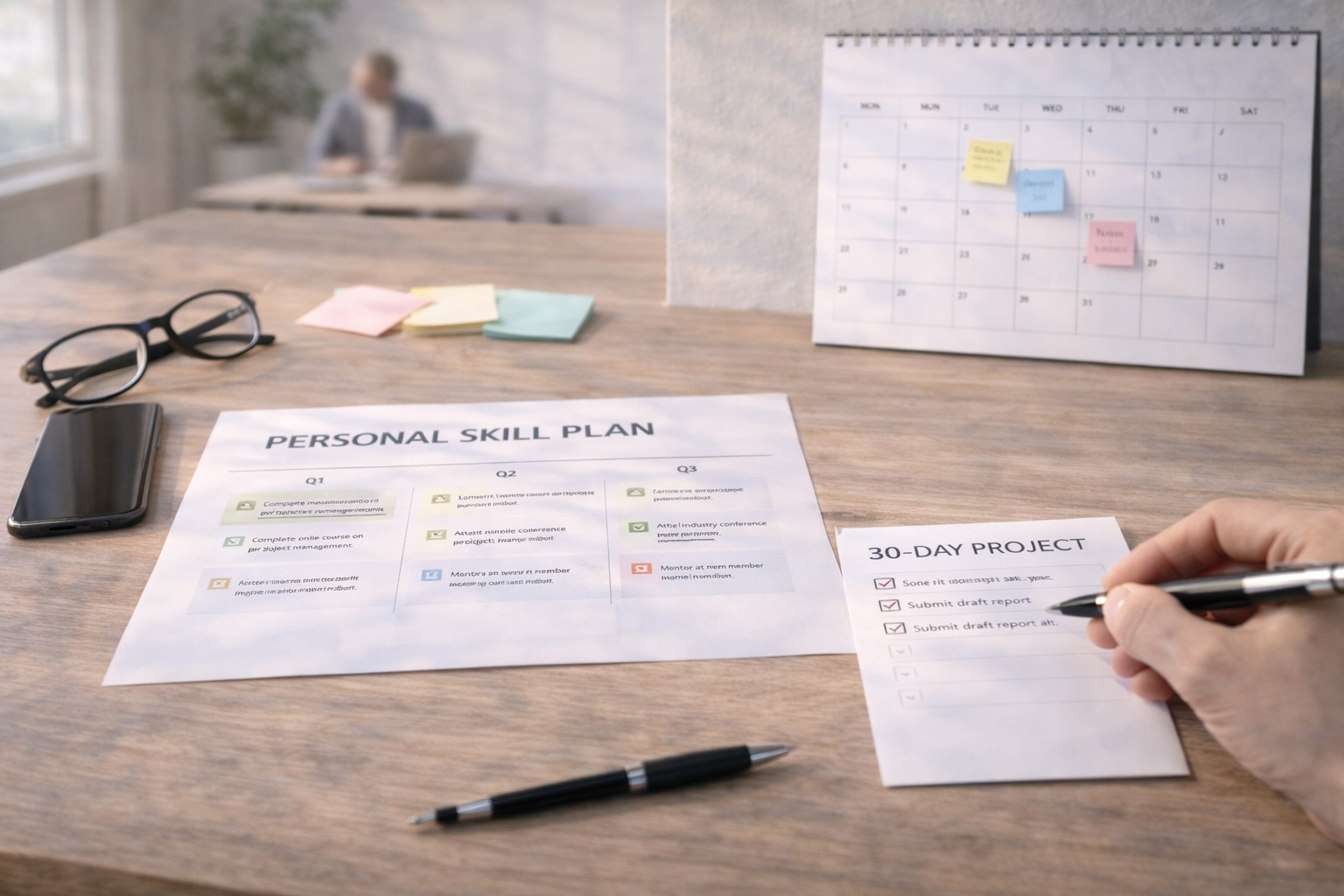
Moving forward in your profession requires a clear, adaptable plan that aligns daily effort with long-term goals. A personal skill plan focuses on the abilities that matter most to your next role and creates milestones you can measure. By breaking larger ambitions into specific learning targets, you reduce overwhelm and create momentum. This approach helps you stay intentional about what to learn and when to apply it.
Assess your current position and priorities
Begin by taking stock of your existing skills, recent accomplishments, and the gaps that hold you back from desired opportunities. Use feedback from peers, performance reviews, and job descriptions to identify which competencies are most valuable. Prioritize skills that are both relevant to your field and transferable across roles to maximize flexibility. This assessment provides the foundation for a targeted, efficient plan.
Once priorities are clear, set realistic timelines for improvement. Short windows encourage consistency, while longer targets help with mastery and depth.
Design actionable learning steps
Translate priorities into concrete actions such as online courses, project-based practice, mentorship, or cross-functional assignments. Define specific outcomes for each action: what you will be able to do, how you will demonstrate it, and how success will be measured. Allocate effort in weekly blocks so learning becomes a predictable part of your routine rather than an occasional task. Include checkpoints to review progress and adjust learning methods when needed.
- Choose one focused skill per quarter.
- Create a 30-day micro-project to apply new knowledge.
- Seek regular feedback from a mentor or colleague.
Practical tasks accelerate competence more than passive consumption, so embed practice into every learning activity.
Build accountability and integrate learning
Accountability transforms intention into habit. Share your plan with a peer or coach, schedule recurring progress reviews, and use simple trackers to record wins and setbacks. Tie skill development to real work by volunteering for tasks that stretch your abilities and document results. Integrating learning with your job ensures skills are visible and valued by decision-makers.
Small, consistent actions compound into meaningful capability over time. Celebrate incremental progress to maintain motivation and refine your plan as circumstances change.
Conclusion
A personal skill plan turns vague ambitions into measurable steps and keeps career growth intentional. Focus on high-impact skills, practice deliberately, and use accountability to sustain momentum. Regularly revisit your plan to adapt it to new opportunities and priorities.