

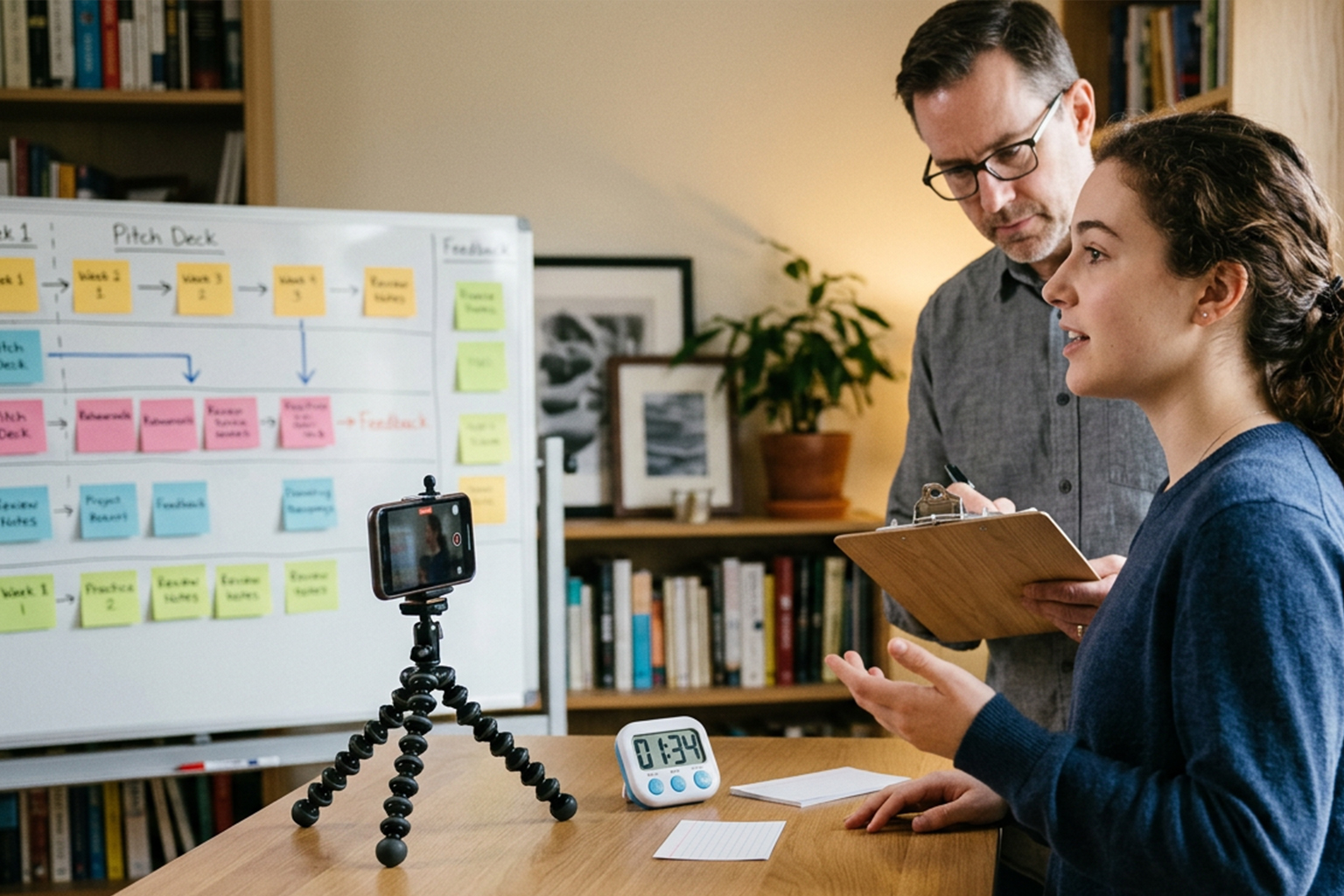
Combining short, project-style work with deliberate practice sessions creates momentum and clarity in learning. Short projects provide a real context to apply tiny skills, while deliberate practice isolates components for repeated improvement. Together they reduce vague goals and turn curiosity into measurable progress. This article explains how to structure those projects and practice windows so they feed each other.
Define Clear, Compact Project Goals
Start by choosing projects that can be completed or meaningfully advanced in a week or two. Favor narrow, observable outcomes such as recording a two-minute presentation rather than broad aspirations. These compact goals make it easier to identify the specific skills you need to practice deliberately. They also create natural deadlines that improve focus and reduce perfectionism.
Write a checklist of success criteria and the micro-skills each criterion depends on. Use that list to guide practice choices.
Schedule Focused Practice Windows
Block short, consistent time slots dedicated exclusively to practice of the micro-skills identified for the project. Sessions of 20–40 minutes three to five times per week are often sufficient to maintain momentum without causing burnout. During each window, eliminate distractions and work on one micro-skill using repetition, variation, or targeted drills. Treat these sessions as experiments: change one variable at a time to see what produces faster improvement.
Record what you tried and the outcome after each session. Use those notes when planning the next project iteration.
Use Rapid Feedback and Reflection
Incorporate quick feedback loops into both projects and practice sessions so you can adjust course before bad habits solidify. Feedback can come from peers, mentors, self-recording, or measurable metrics tied to the project goal. After each short project cycle, spend a deliberate reflection session reviewing what improved, what stalled, and which micro-skills need more work. Structured reflection turns raw experience into actionable next steps.
Decide on one concrete change to test in the next practice window. Keeping feedback cycles short accelerates learning and keeps projects aligned with real progress.
Measure Progress with Lightweight Metrics
Choose a few simple metrics that reflect meaningful movement toward the project outcome and track them consistently. Metrics might include completed rehearsals, error rates, time to complete a task, or a publicly posted sample. Keep measurement quick and unobtrusive so it doesn’t interrupt practice flow; the point is to reveal trends rather than obsess over single sessions. Over several cycles, these numbers help you prioritize which micro-skills deserve more deliberate attention.
Use the metrics to decide whether to scale complexity or focus on fundamentals. A lightweight dashboard or even a notebook table is sufficient.
Conclusion
Aligning compact projects with focused practice compresses feedback and clarifies effort. Small, repeated experiments yield steady improvement and avoid wasted busywork. Start with one weeklong project and two focused sessions to see rapid gains.