

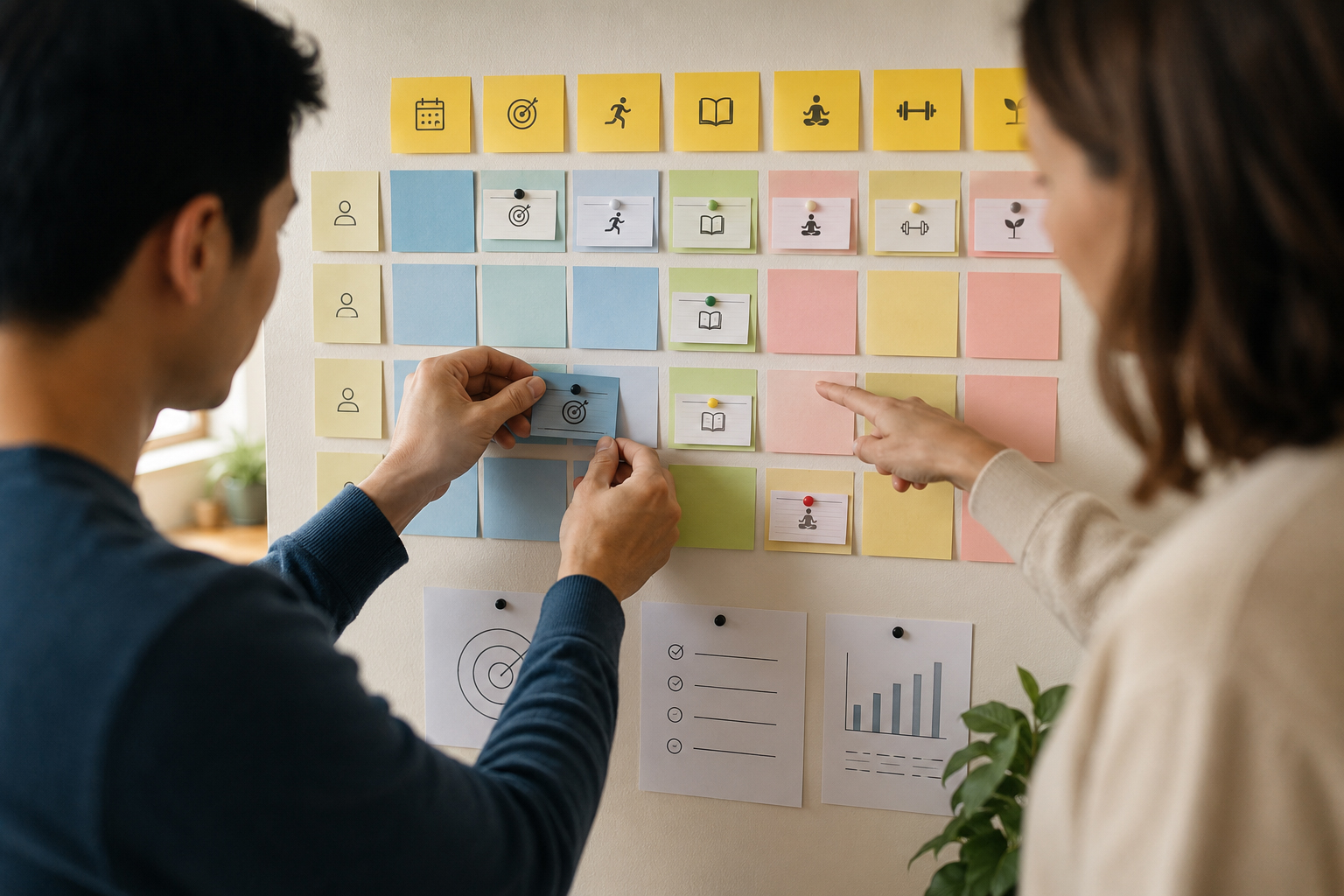
Designing your days with intention is the simplest lever for steady skill growth. When you align small habits, focused time blocks, and clear goals you make progress predictable and sustainable. This article outlines practical structures you can adopt without overhauling your life. The aim is to create repeatable daily choices that compound into meaningful improvement.
Set clear, compact goals
Begin each week by choosing one or two compact learning goals that are specific and actionable. Compact goals reduce decision fatigue and make it easier to convert intention into action, for example mastering a technique or completing a focused project segment. Keep success criteria simple so you can judge progress quickly and adjust the next session. Over time, these small wins build confidence and clarify what to prioritize next.
Translate each compact goal into daily tasks that take 20 to 60 minutes. Consistency matters more than long sessions, so favor regular short efforts over occasional marathons.
Design focused daily blocks
Structure your day around a few focused blocks reserved for learning, practice, and reflection. Use the same time windows repeatedly so your brain adapts and resistance decreases; morning or evening blocks often work well but choose what fits your energy pattern. Within each block, remove distractions, set a single micro-objective, and apply a timer to create urgency and clarity. This predictable cadence makes it easier to maintain momentum across weeks and months.
- Example: 25 minutes focused practice, 5 minutes review, repeat twice.
- Example: 45 minutes deep work on a single concept, then a short summary note.
Small, repeatable rituals around these blocks help turn intention into routine and free cognitive bandwidth for learning itself.
Use deliberate practice loops
Deliberate practice means focusing on the hardest aspects, getting feedback, and iterating quickly. Break skills into measurable drills, seek feedback from tests or peers, and adjust based on what stalls progress. Use short review cycles to capture what worked and what didn’t, then plan the next micro-session to target the gap. This loop of targeted effort and quick feedback accelerates improvement without requiring excessive time.
Record outcomes and refine drills; concrete evidence of progress keeps motivation steady and decisions practical.
Lower friction and keep momentum
Remove barriers that prevent you from starting: prepare materials the night before, automate reminders, and keep a minimalist toolkit so switching to practice is effortless. Celebrate tiny milestones and set checkpoint reviews to prevent drift, but avoid perfectionism that stalls action. Building momentum is about repetition, not intensity, so guard the habit through small wins and gradual escalation. Over time, reduced friction turns sporadic effort into a reliable daily habit.
Simple systems that minimize choices and emphasize continuity will sustain your learning across busy periods and competing priorities.
Conclusion
Create compact goals, schedule focused blocks, and practice deliberately each day. Reduce friction so starting becomes automatic and track feedback to refine your approach. These small design choices compound into consistent skill growth over time.