

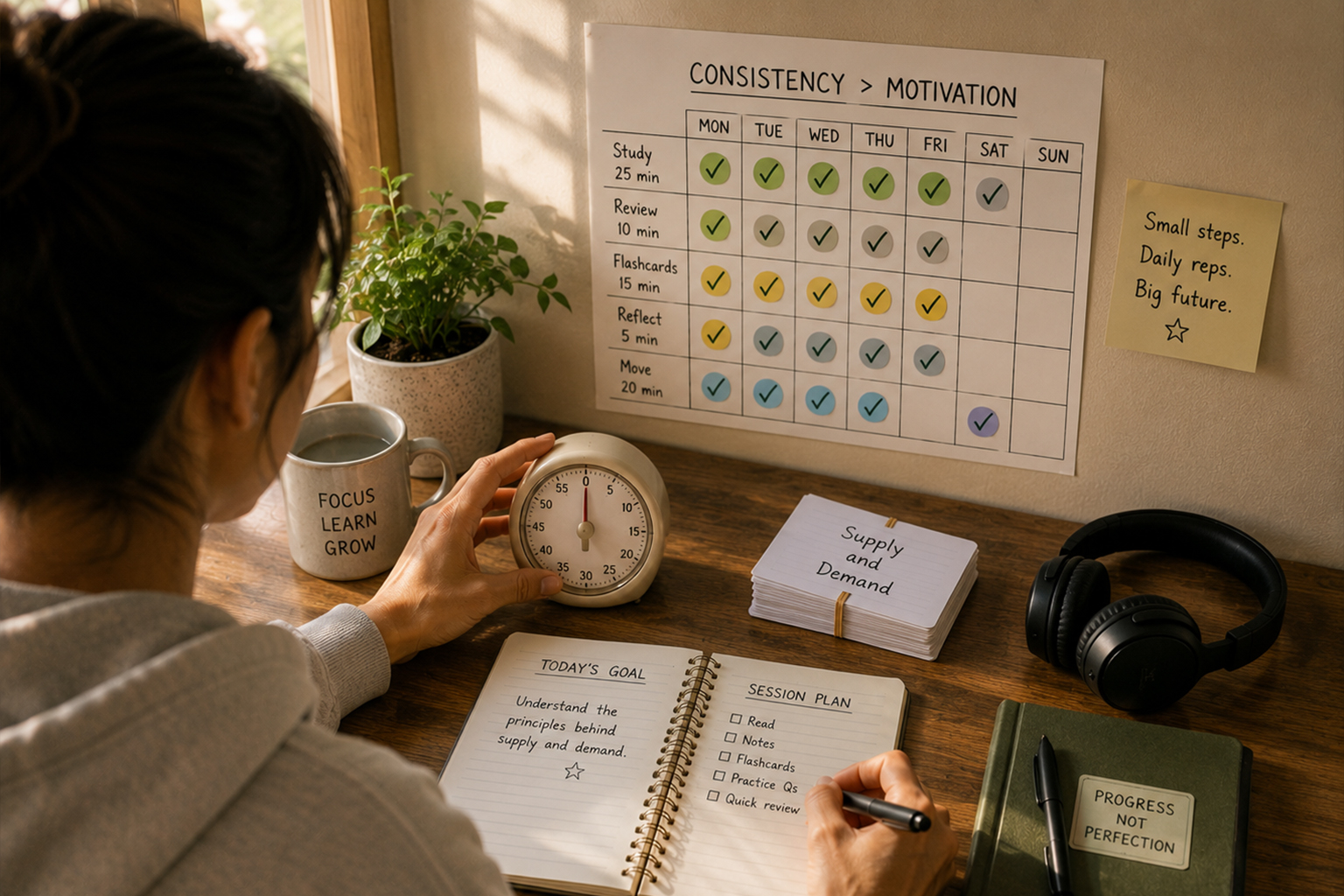
Establishing clear learning rituals makes deliberate practice predictable and less mentally taxing. Rituals reduce friction, anchor attention, and create a simple structure you can repeat even on busy days. When small, consistent actions are combined with focused goals, progress compounds and confidence grows. This article explains why rituals work, how to design them, and practical tips to keep them sustainable. You’ll get actionable guidance to build routines that support steady skill progression without burnout.
Why rituals matter
Rituals remove the need to decide what to do each time you sit down to learn, which conserves willpower and lowers friction. They create environmental and temporal cues that prime your brain for focused work and shorten the time it takes to enter a productive state. Repeated rituals turn discrete actions into habits, making practice more automatic and reliable over weeks and months. That reliability builds momentum and prevents good intentions from being derailed by busy schedules or unexpected demands.
- Reduce decision overhead so practice starts quickly.
- Create predictable triggers for focused attention.
By simplifying the start of a learning session, rituals help you get consistent volume and quality of practice. Small, regular contributions add up to meaningful improvement.
Designing a compact learning ritual
Keep rituals compact so they’re easy to execute even on constrained days: a short warm-up, a focused practice segment, and a quick review. Define a clear trigger (time, place, or preceding action), a fixed duration, and one specific outcome you’re aiming for in that session. Choose tools and resources in advance to avoid searching mid-practice, and plan one tiny measurable win to close the session. Compact rituals lower activation energy and increase the likelihood you’ll follow through consistently.
- Trigger: tie practice to an existing habit.
- Duration: 20–45 minutes for focused work.
- Outcome: one small measurable improvement.
Simplicity is the point: the easier the ritual to start, the more often it will occur. Over time you can lengthen or deepen sessions as capacity grows.
Adapting and sustaining rituals
Track basic metrics like frequency and perceived progress to know when a ritual needs adjustment. If a ritual consistently fails, shorten it, change the trigger, or swap resources so it fits current constraints. Periodically introduce variety—rotate topics, tweak intensity, or set mini-projects—to prevent boredom while preserving the core structure. Use accountability partners or scheduled check-ins to reinforce consistency when motivation dips.
- Review weekly to spot friction points.
- Rotate focus to maintain engagement.
Adaptation keeps rituals resilient across changing seasons of work and life. Small, deliberate changes maintain momentum without sacrificing the habit’s integrity.
Conclusion
Learning rituals transform intention into repeatable practice by lowering activation energy and creating predictable cues. Design compact routines with clear triggers, short durations, and one measurable outcome to ensure consistency. Regular review and modest adjustments help keep rituals sustainable and aligned with long-term skill goals.