

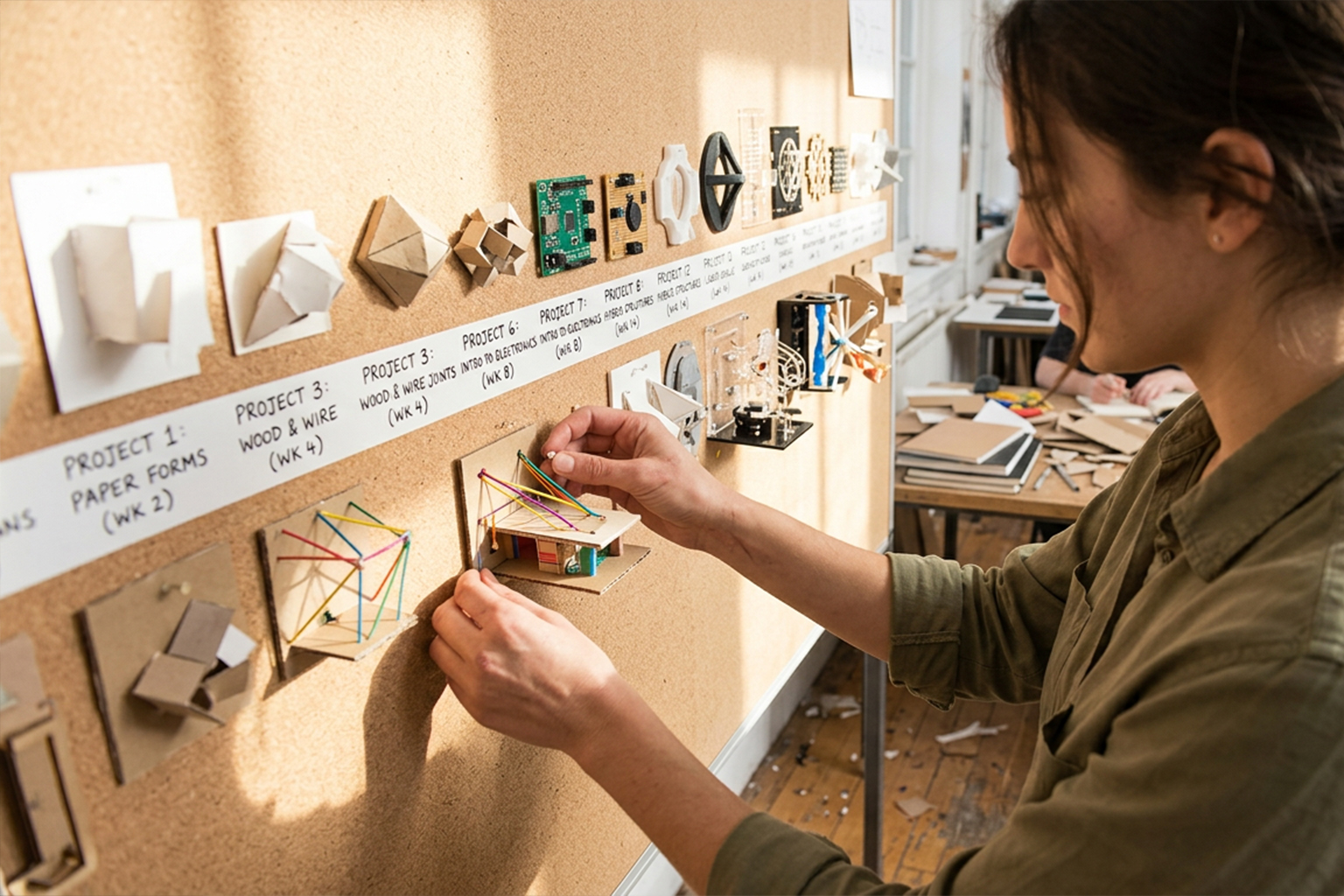
Small, focused projects are a practical way to convert curiosity into repeatable outcomes.
They keep scope tight while giving every learning session a clear purpose.
Layering these projects over weeks or months creates momentum and visible skill gains.
This approach fits busy schedules and reduces decision fatigue about what to practice next.
Why small projects accelerate learning
The power of small projects comes from constrained complexity and quick feedback loops. Each project targets a concrete skill or subskill and ends with a tangible output. That output makes it easier to evaluate progress and keeps motivation high. Short cycles also let you fail cheaply and iterate based on real results.
Start with examples you can finish in a few hours or days. That habit of finishing builds confidence and a habit of shipping, which compounds over time.
Designing progressive project layers
Begin by mapping a sequence of projects that increase slightly in difficulty or scope. Use the previous project as a foundation so each new challenge leverages what you already built. Define clear success criteria for every layer—what must be working before you move on. Estimate time and pick constraints that force creative solutions instead of feature bloat.
- Prototype: a minimal version to test the core idea quickly.
- Improve: refine based on feedback and fix the weakest link.
- Expand: add controlled complexity only when foundations are reliable.
Keeping these phases explicit prevents overwhelm and ensures steady forward movement. Shift only one variable at a time so progress remains measurable and learnings are transferable.
Measuring progress and adapting fast
Track what you learned from each project with brief notes or annotated code samples. Choose a small set of metrics — time to complete, error types, or feature parity — to monitor improvement. Regular reviews reveal patterns and help you decide whether to repeat, pivot, or scale a project. Peer feedback or automated tests can speed up insight and reduce blind spots in your self-assessment.
Schedule short retrospectives after every layer to capture lessons while they are fresh. Use those notes to adjust the next project’s scope, avoiding repeated mistakes and optimizing for growth.
Sustaining momentum across months
Consistent momentum depends on habit, not bursts of inspiration. Set predictable, small sessions in your calendar so progress is nonnegotiable. Mix variety into the layers to prevent boredom: alternate creative tasks with technical refinements. Reward milestones with brief breaks or a small celebration to maintain positive reinforcement.
Periodically reassess goals and trim projects that no longer align with your priorities. Adjust timelines and complexity as life changes, keeping the system flexible but disciplined.
Conclusion
Layering small projects converts scattered effort into cumulative capability.
Keep scope tight, build on past work, and review outcomes regularly.
Over months, this disciplined approach produces deep, lasting skill momentum.