

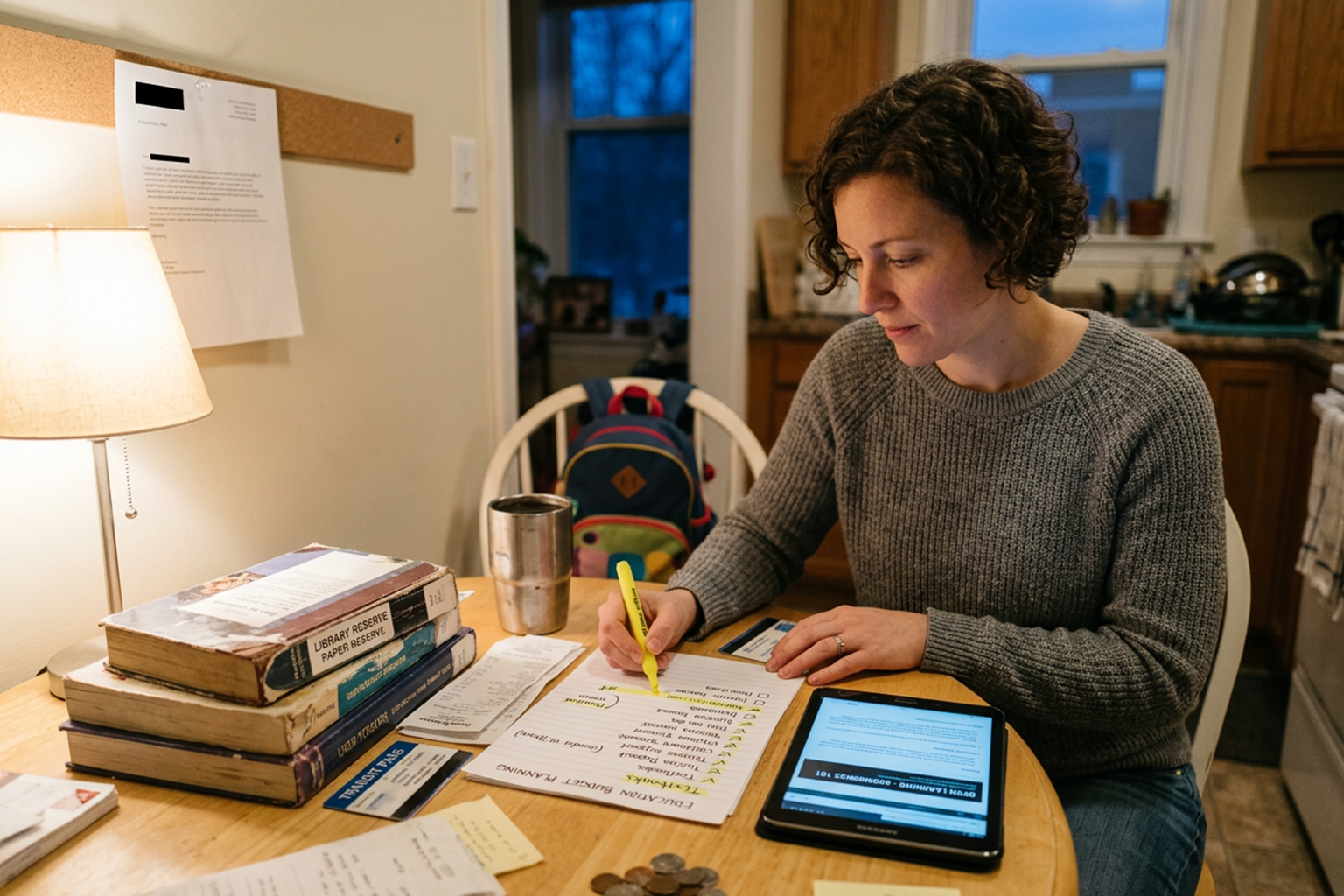
Education can be expensive, but small, deliberate choices often add up to meaningful savings. This piece focuses on concrete steps families and adult learners can take to reduce spending without lowering standards. It highlights cost review, everyday trade-offs, and practical funding options. Read on for specific tactics you can apply this year and over the long term.
Review Costs and Priorities
Start by listing every education-related expense for a year: tuition, books, supplies, fees, commuting, and childcare. Compare that list with the parts that actually move the needle toward your learning goals, and mark nonessential items to cut or postpone. A clear inventory exposes repeatable savings opportunities and prevents last-minute, costly choices. When you know where money actually goes, trimming becomes deliberate rather than reactive.
Setting priorities makes trade-offs easier to accept and explain to household members. It also helps when negotiating with schools or choosing between program options. Keep priorities visible so spending aligns with goals.
Practical Cost-Saving Moves
Several straightforward habits lower education spending without dinging quality. Buy used or digital textbooks, share materials with classmates, and rent equipment when practical. Choose community-based or online prerequisite courses if they meet the same requirements at a lower price. Also, schedule classes to reduce commuting or childcare costs by clustering sessions on fewer days.
- Buy secondhand or older edition books when content is similar.
- Use library reserves and open educational resources for core readings.
- Form study groups to split the cost of materials and subscriptions.
Small operational changes like these often save hundreds of dollars per term. Combine a few tactics and the total impact becomes significant.
Funding and Long-Term Choices
Look beyond immediate cuts to the way you fund education. Scholarships, employer tuition benefits, and targeted grants can eliminate costs entirely for specific courses or certificates. If borrowing is necessary, compare interest rates and repayment terms carefully and prioritize shorter repayment windows when affordable. For long-term planning, consider lower-cost institutions or accredited online programs that deliver equivalent credentials for less money.
Keep a running plan that reassesses funding each year and adjusts choices based on outcomes. Treat education spending as an investment and measure return through skills acquired and opportunities gained.
Conclusion
Reducing education costs doesn’t require sacrificing quality; it requires attention and choice. Start with a clear inventory, adopt everyday savings habits, and use funding options strategically. Over time, those choices protect both learning outcomes and household finances.