

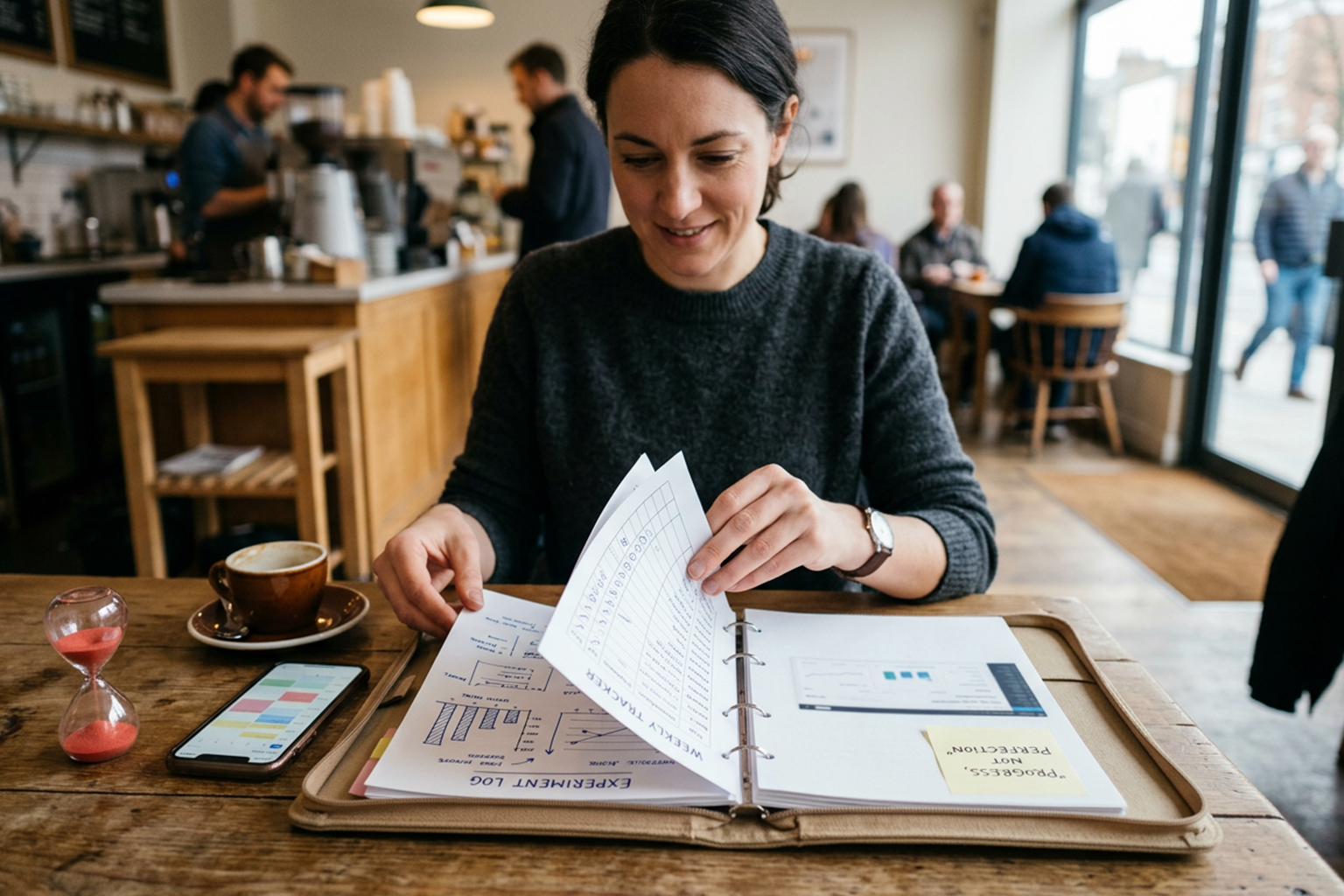
When your next career move feels unclear, small experiments offer a practical way forward. They let you test assumptions about work you enjoy, skills you lack, and markets that value your time. Each short project creates evidence you can show, adjust, or discard without burning bridges. Over time those tiny wins add up into a clearer sense of direction and stronger proof of competence.
In the sections that follow you’ll find a simple framework for running low-risk tests that teach faster than hours of worrying. These steps are designed to fit into busy weeks and deliver usable results.
Assess Your Current Momentum
Start by taking inventory: recent wins, feedback you received, and moments when you felt energized. Look for patterns rather than polished outcomes — a good experiment often grows out of something you already do well. Note the contacts and tools that make those moments possible; they are the raw materials for tests. This quick map helps you choose experiments that are realistic and revealing.
Keep this assessment short and honest. It should steer experiments toward areas where a small test can give maximum clarity.
Design Tiny Work Tests
Pick projects that can be completed in a few days or a single week: a short freelance task, a mock brief, or a mini workshop for colleagues. Define one clear metric of success — a client response, a measurable outcome, or a concrete deliverable. Limit scope fiercely so you learn, not drift. Timeboxing forces decisions and surfaces the trade-offs that matter most.
Make each experiment a probe, not a thesis. The goal is evidence, not perfection.
Make Evidence Portable
Record results in formats you can reuse: a brief case note, a one-page summary, or a screenshot with context. Capture the problem, your approach, and the outcome in plain language so someone unfamiliar with your work can understand it quickly. Attach a measurable result where possible — time saved, conversion lift, or a client quote. Portable evidence turns ephemeral effort into something that advances your next conversation.
Store these artifacts in a single place and update them after each test. Small edits make them ready when opportunity arrives.
Build Weekly Feedback Loops
Set a recurring 30–60 minute slot to review what you tried and what changed. Ask three questions: what did I learn, what surprised me, and what will I change next? Share results with a peer or mentor for blunt feedback; outside perspectives often highlight the signal you missed. Use the answers to shape the next tiny test and keep improvements consecutive rather than scattered.
These loops convert isolated experiments into a learning rhythm. Over weeks they compound into visible progress.
Conclusion
Tiny professional experiments reduce the risk of big career bets by turning uncertainty into evidence. Do short, timeboxed projects, record what matters, and review weekly to refine your approach. Small, steady tests build clarity and move your career forward with less drama and more confidence.