

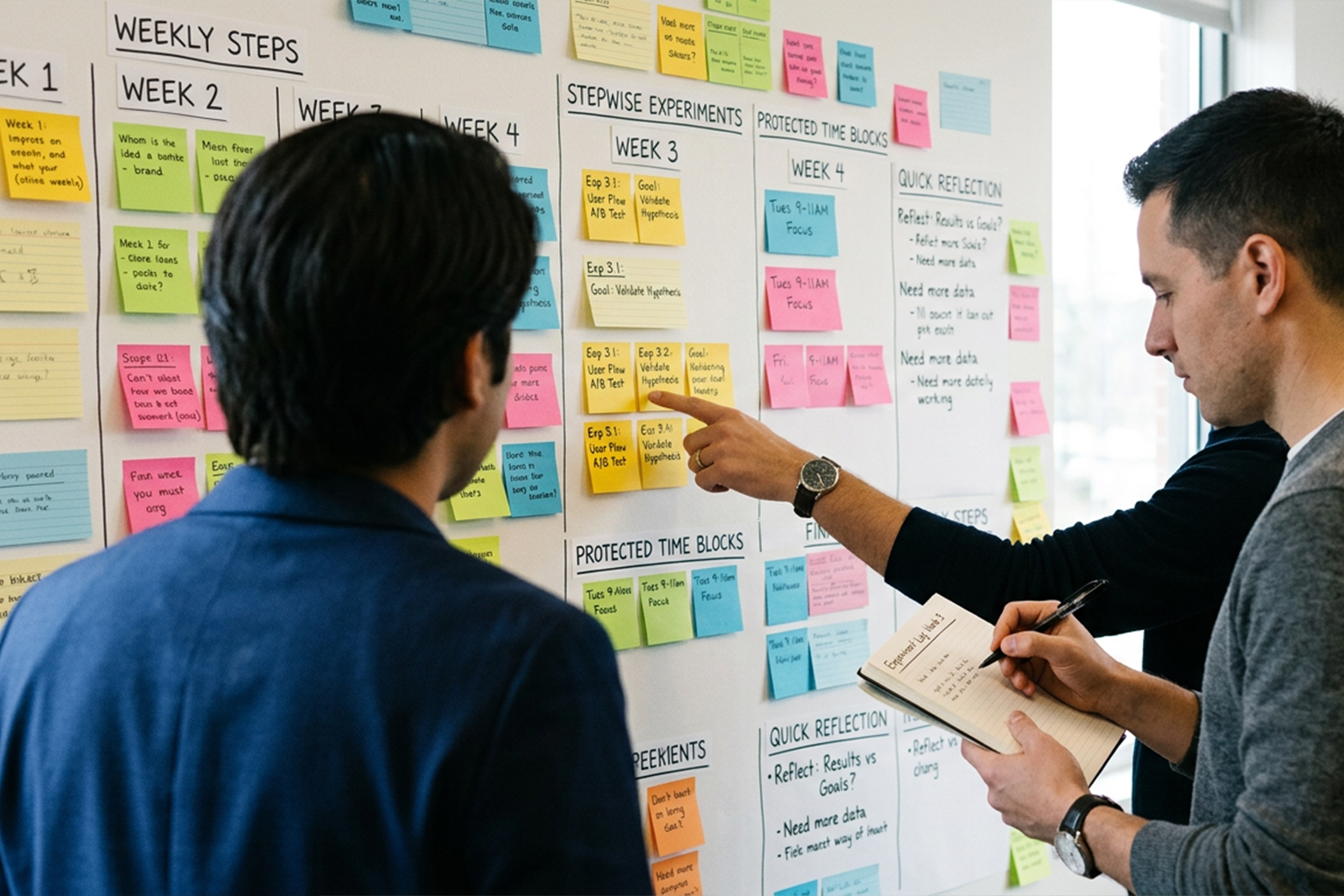
Advancing your career often feels like chasing a moving target, but steady progress is achievable with a clear framework. This piece describes how to break big goals into weekly, testable actions that build momentum without burning out. The approach focuses on small experiments, structured time blocks, and regular reflection so adjustments are fast and low risk. Use these steps to convert ambition into consistent, measurable forward movement.
Define Small, Testable Objectives
Start by translating broad career goals into specific outcomes you can test within one to four weeks. Choose objectives that are observable and measurable, such as completing a course module, presenting a prototype, or publishing a short case study. Framing goals as experiments reduces pressure and increases learning: every result yields useful data about fit and feasibility. Keep scope limited so you can finish and evaluate quickly.
Small objectives encourage decisive action and prevent perfectionism from stalling progress. They also make it easier to celebrate wins and iterate on strategy efficiently.
Structure Weekly Time Blocks
Create consistent weekly blocks dedicated to different career priorities: skill building, networking, delivery, and reflection. Assign one or two focused tasks per block to avoid context switching and to respect your cognitive limits. Over several weeks, rotate blocks so momentum accumulates across multiple fronts without overwhelming any single area. A predictable rhythm reduces decision fatigue and makes habit formation simpler.
- Skill building: 2–4 hours focused on targeted practice.
- Networking: one meaningful outreach or follow-up each week.
- Delivery: a weekly demo, draft, or portfolio update.
Use a simple calendar template to protect these blocks and reassess their balance monthly. This keeps progress visible and adaptable to changing priorities.
Measure, Reflect, and Adjust
Design quick metrics for each experiment so you can judge outcome and effort objectively. Metrics could be completion, feedback quality, time invested, or impact on your opportunities. At the end of each week, spend fifteen to thirty minutes reviewing what worked, what stalled, and why. Documenting insights transforms isolated actions into an evolving strategy and helps you prioritize future experiments.
Over time, patterns will reveal which activities yield the most return for your effort. Use those signals to double down or pivot, maintaining momentum while minimizing wasted time.
Conclusion
Adopt a stepwise, experiment-driven routine that breaks big career goals into weekly tests and protected time blocks. Regular measurement and brief reflection convert effort into actionable insight and clearer priorities. With consistent application, this framework produces steady, sustainable career advancement.